Reading the title, you may be reminiscing about a recent wedding or one that is scheduled for this spring. Imagine a stunning display of cascading branches covered in double-white flowers welcoming you to the wedding venue in glorious style. Your senses delight in the romance of the moment.
While it may sound like a blissful and lovely setting for the bride and groom, this calls for a different type of celebration. It is mid-March in Dallas (Zone 8) and this beautiful bride is ready to make her appearance. Please meet…
Spirea ‘Bridal Wreath’
Spirarea x vanhouttei ‘Bridal Wreath’
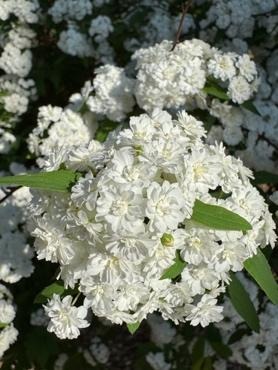
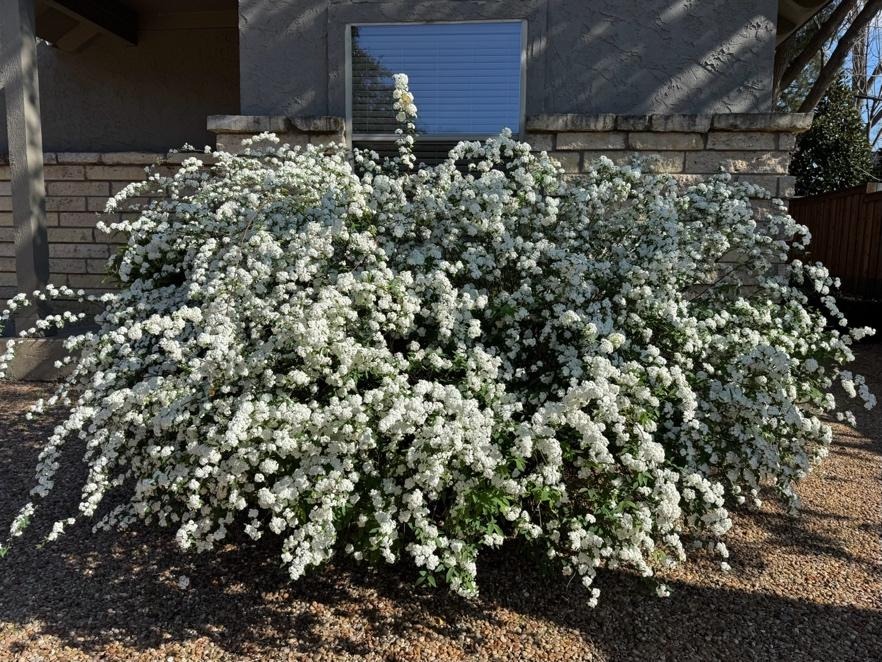
This is our Spirea ‘Bridal Wreath’ bush gracing us with her beauty, and growing in our gravel driveway, for the 20th consecutive year. However, the abundance of white blooms is the most brilliant we’ve ever experienced. With a generous spread of 5’ tall x 10’ across, she certainly makes a spectacular presence.
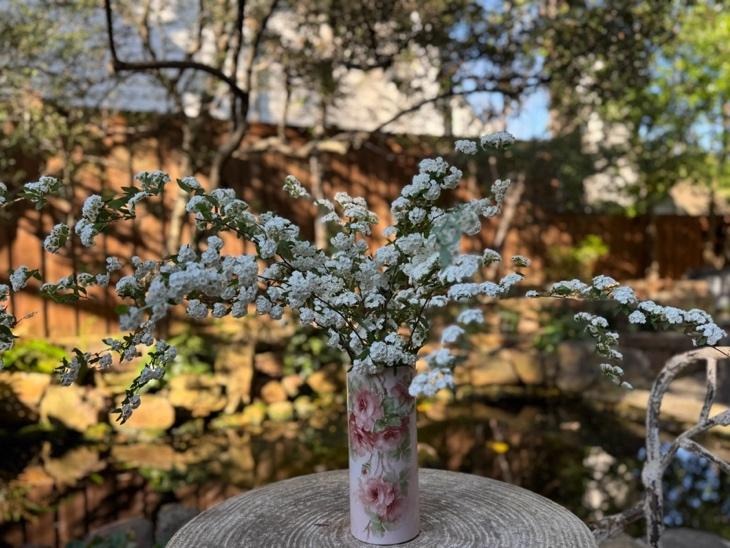
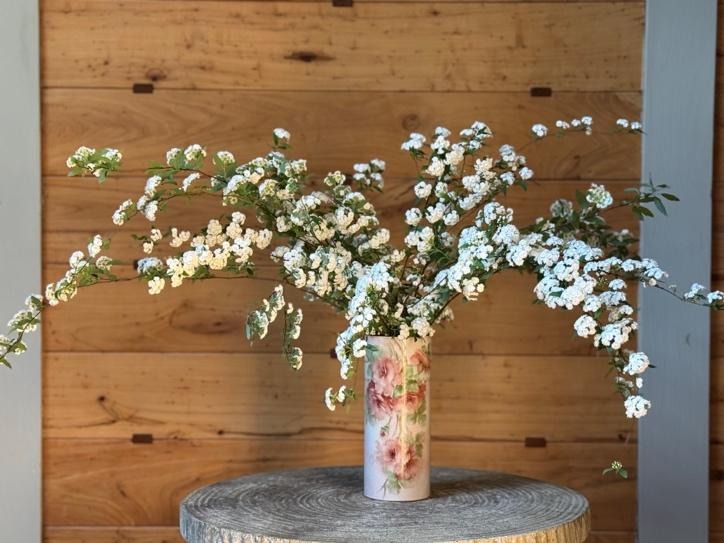
A lovely China vase hand painted by my late grandmother was the perfect whisper of nostalgia for displaying the arching branches of ‘Bridal Wreath’ Spirea. It was a wedding gift from 1970.
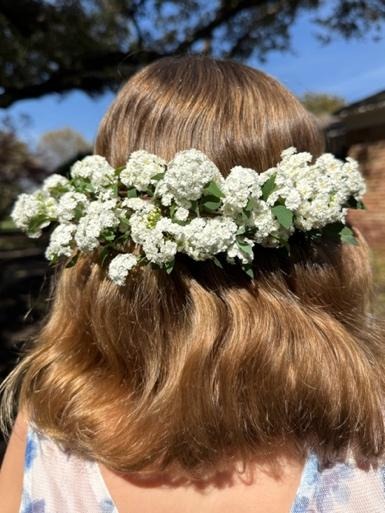
This “melt-your-heart” moment for me was sharing the story of ‘Bridal Wreath’ with my 10-year old granddaughter, Sadie. Without hesitation she asked if we could please make a wreath for her to wear to the Daddy/Daughter Dinner and Dance that night. It felt as if this experience had magically happened “for such a time as this”. A treasured memory was created as together we imagined Sadie wearing a ‘Bridal Wreath’ to her own wedding someday!
Growing spirea is a somewhat effortless endeavor that you can read about here. FYI…Our spirea only receives mid-morning to late afternoon filtered sun and still gives us a show-stopping three week “sold out” performance!
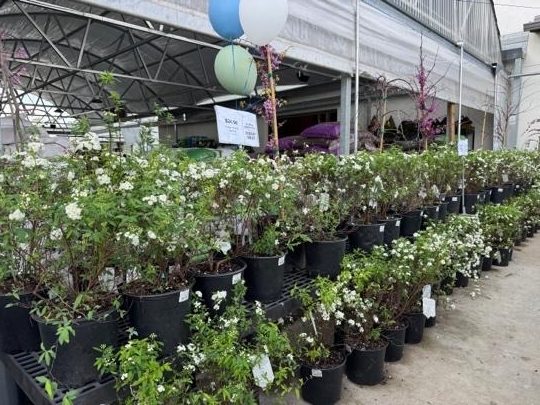
One of our local garden centers is offering spirea, as of today, for a very reasonable price. Don’t miss the opportunity to let ‘Bridal Wreath’ fill your yard with an electrifying touch of spring color!
Linda Alexander, Dallas County Master Gardener Class of 2008
The Awards meeting for Dallas County Master Gardeners this year reminded me of how blessed I am to be a part of this organization and especially Raincatcher’s Garden of Midway Hills. The board in charge of this event, created an opportunity to celebrate the amazing things that Master Gardeners have done over many years. The variety of projects, the people served, and the information shared is truly something of which to be proud.
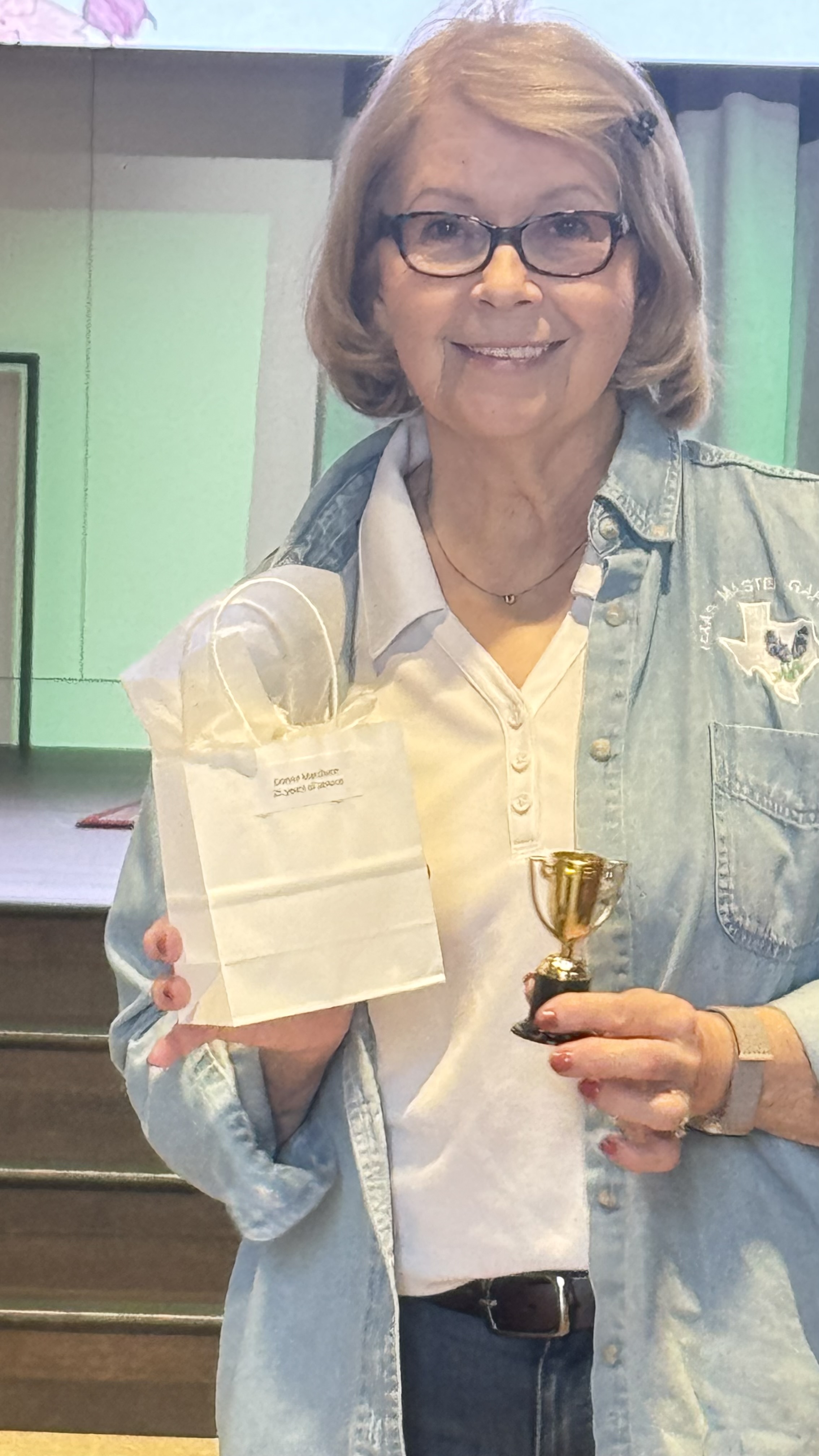
So many of our volunteers were honored for their service and commitment to Dallas County Master Gardeners. Thank you for your enduring hard work and consistency.
Mary Kay Estep was a delightful MC, Cynthia presented a lifetime achievement award, and then a roll call of familiar names filled the screens, many who have graced Raincatcher’s since 2014, and even some before that at Joe Field Road. Many master gardeners have spent time helping at Raincatcher’s during Special Events, meetings, and supporting the fundraising efforts. Thank you for your support and volunteering efforts. It has been a group effort that has allowed us to obtain goals that were beyond our expectations.
We have Class Captains, those who have stayed strong for over 25 years, several who consistently have over 100 hours every year, and those who have amassed an incredible number of hours during their time as Master Gardeners. We have past presidents, board members, project leaders, and those who show up week after week to garden at our project. The vegetable group meets Monday mornings others meet on Tuesday morning to work in a variety of areas – rain garden, pollinator garden, compost area, edible landscape, color wheel, and the courtyard. There are many choices depending on your interests and abilities.
This meeting, unlike the educational content that we are grateful to hear monthly, was filled with reflection, pride, and a sense of family of Master gardeners. Raincatcher’s has a very special place in the heart of many, and I am honored to be a part of this family.
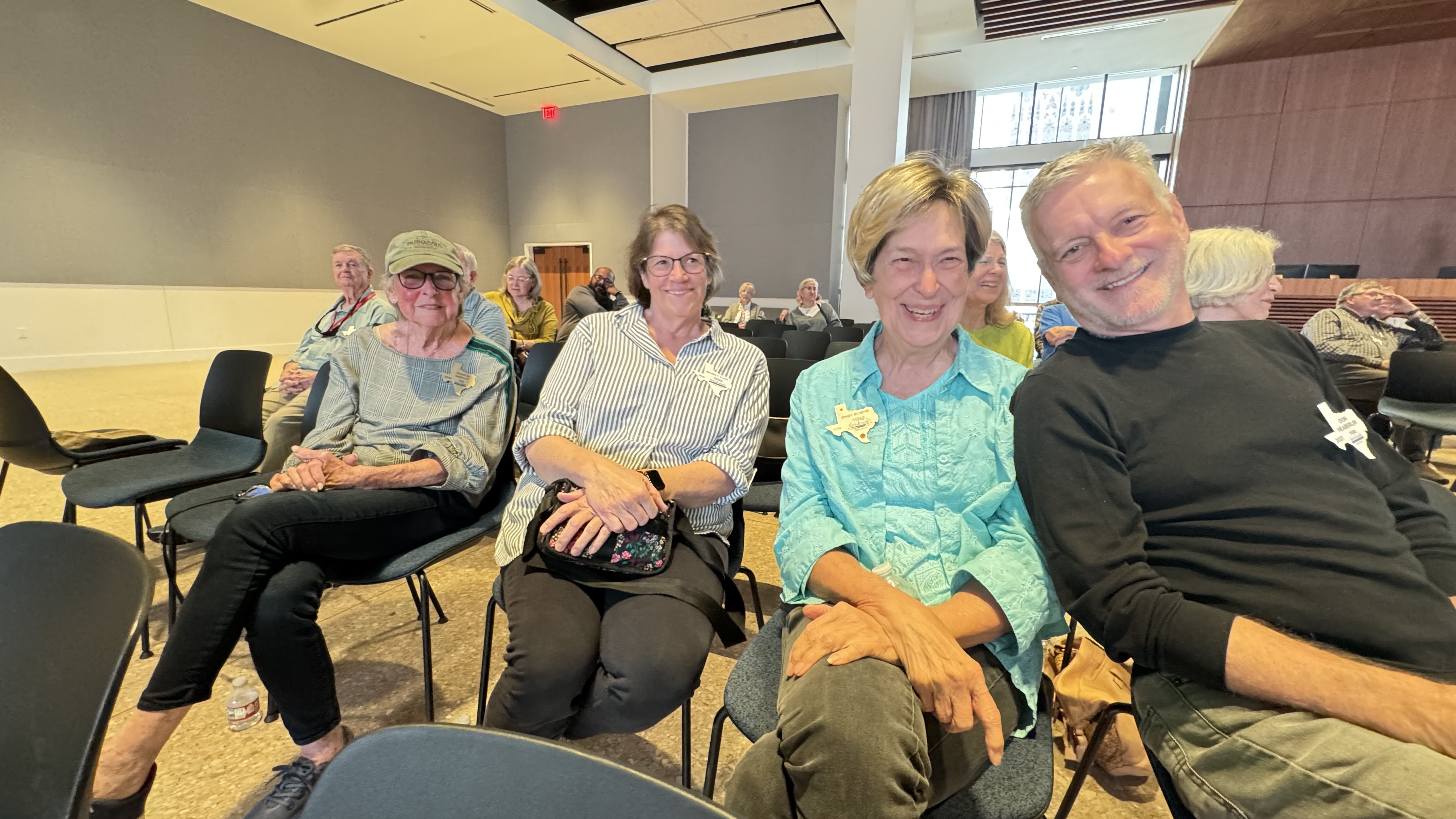
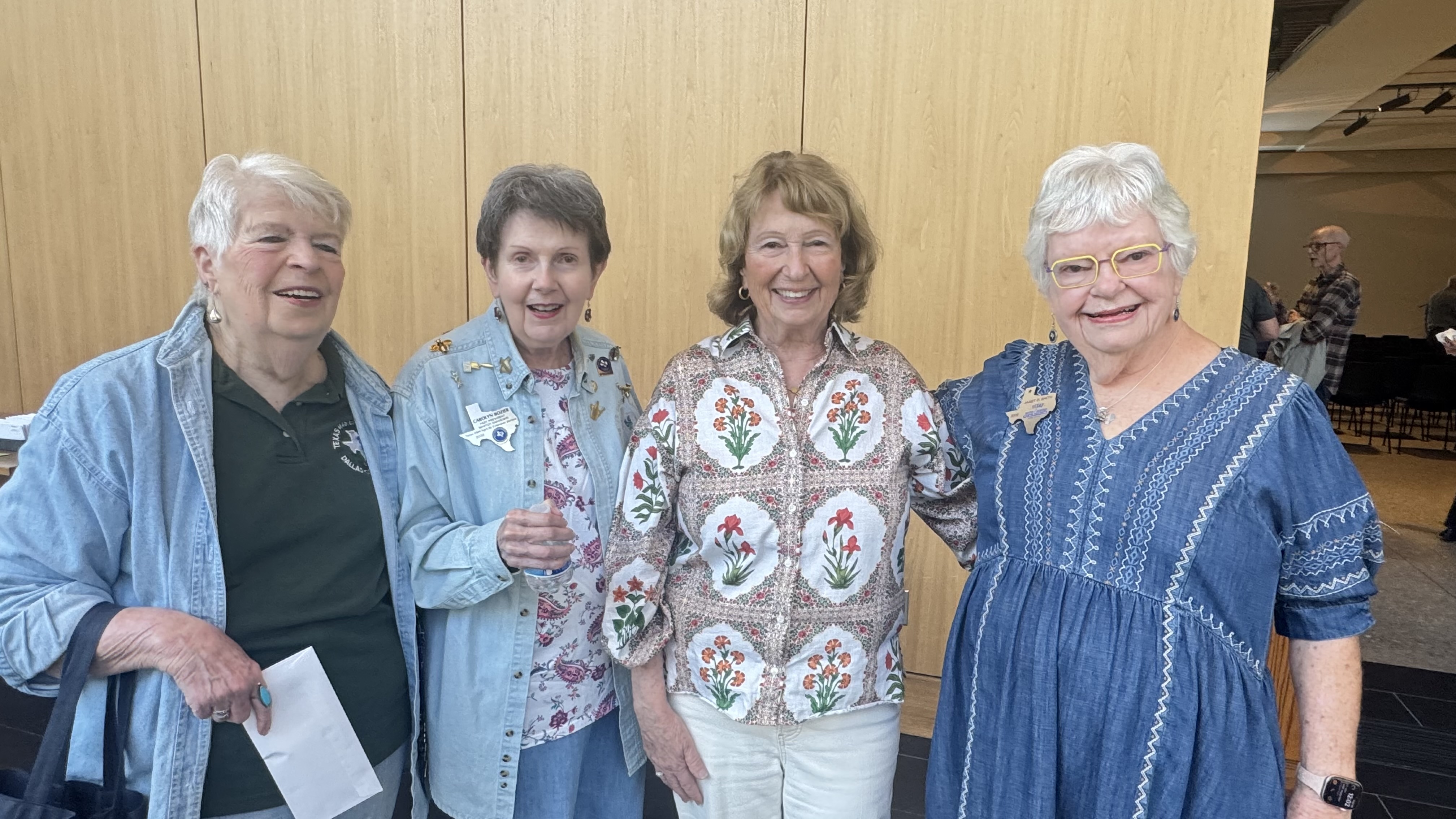
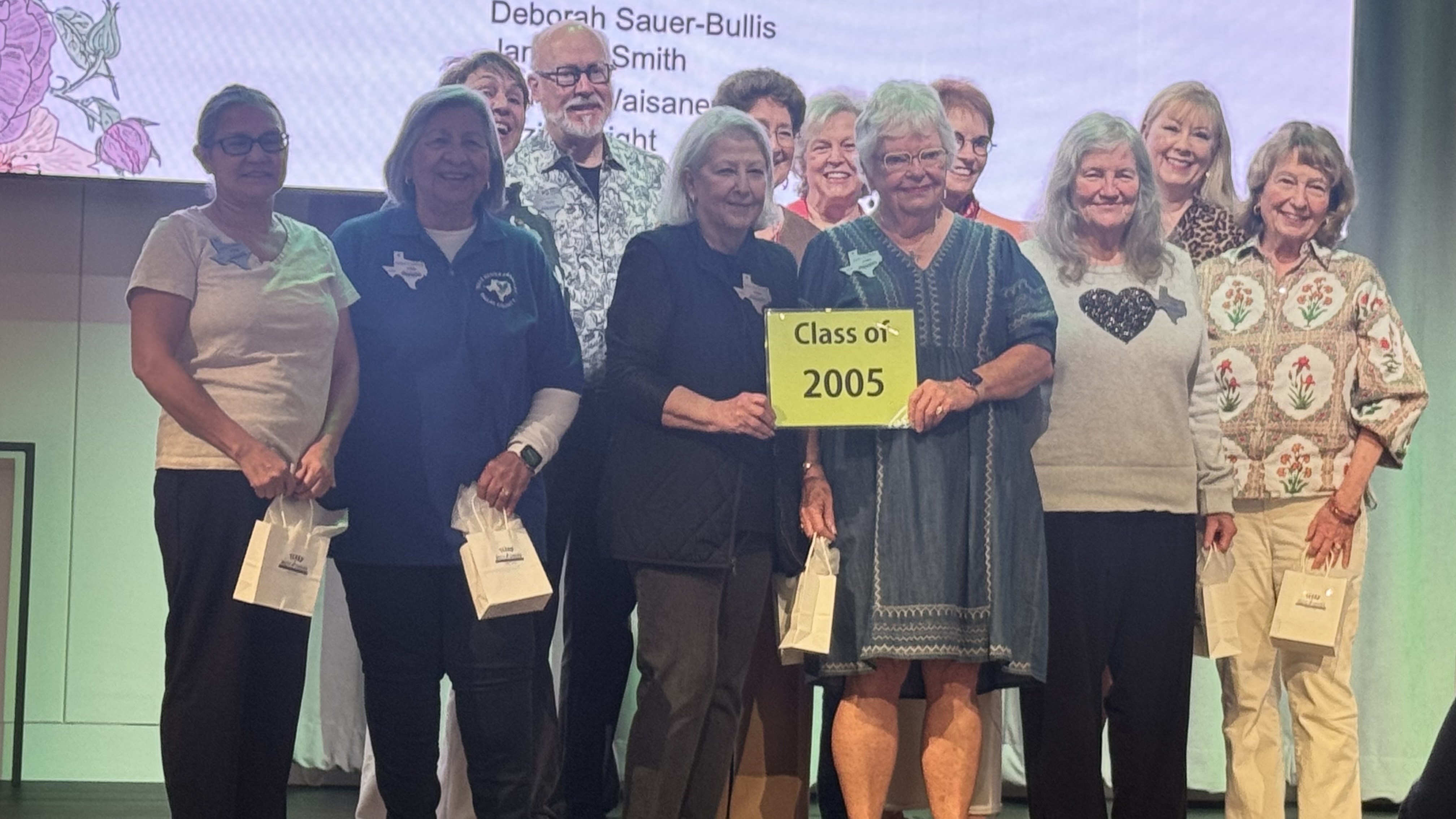
Here are some pictures from the Ceremony – not a complete list, but a representation of the family that Raincatcher’s has become. And for new master gardeners, or those that haven’t found a place to belong, we would love for you to be a part of this community.
This time of year is a busy one. Its a time of new growth and new plans for the future.
For gardeners it often involves visions of “THE BEST GARDEN EVER’.
That tends to be a wonderful few minutes. The beauty and well yes the envy of all who see it may play a part too. One can see the modest acceptance of complements and all quite clearly.
But then comes the realization that ‘THE BEST GARDEN EVER’ Will be a lot of work and the work has to start now.
So obviously the to do list must be started. It can be simple but sadly can get complicated with systems of checks columns headings –must buy a new notebook of course–it can get out of control.
Now there is a lot of good in the list It helps to have a plan and a list of tasks and even a system of checks can be ok .
But remember it’s not helpful when it becomes a goal in itself and checking things off becomes the focus of the day.
Time for a rethink
First note–your old notebook is ok–really and you most likely do not need to draw lines and decide on what color ink would work best.
Next think small and simple. –if the task is Weed the garden–that is way too much and too vague to help weed one bed or even half of one is doable and useful
Plant a tree in the middle of the garden–well maybe this needs breaking down into what to do today–maybe decide on exactly what tree would work in your space.
But more important by far is realizing that your list is for results in the future. Now of course you can’t ignore them. Weeds will ruin the garden if you don’t get them out.
There will never be a tree in the garden if it isn’t planted
However we must not ignore the present. The tasks are endless and yes they must be done but don’t let them keep you from enjoying your garden now.
Gardeners just tend to be people who take the work hard now for results later as an absolute rule. As we just said we have to do this –yes we must and its alot of time consuming work.
But also we are not promised anything but the present–this very day and hour! We must remember this and think about it and practice what it teaches us.
So yes have a list move those sticks out of your garden. Pull those weeds and plant something wonderful.
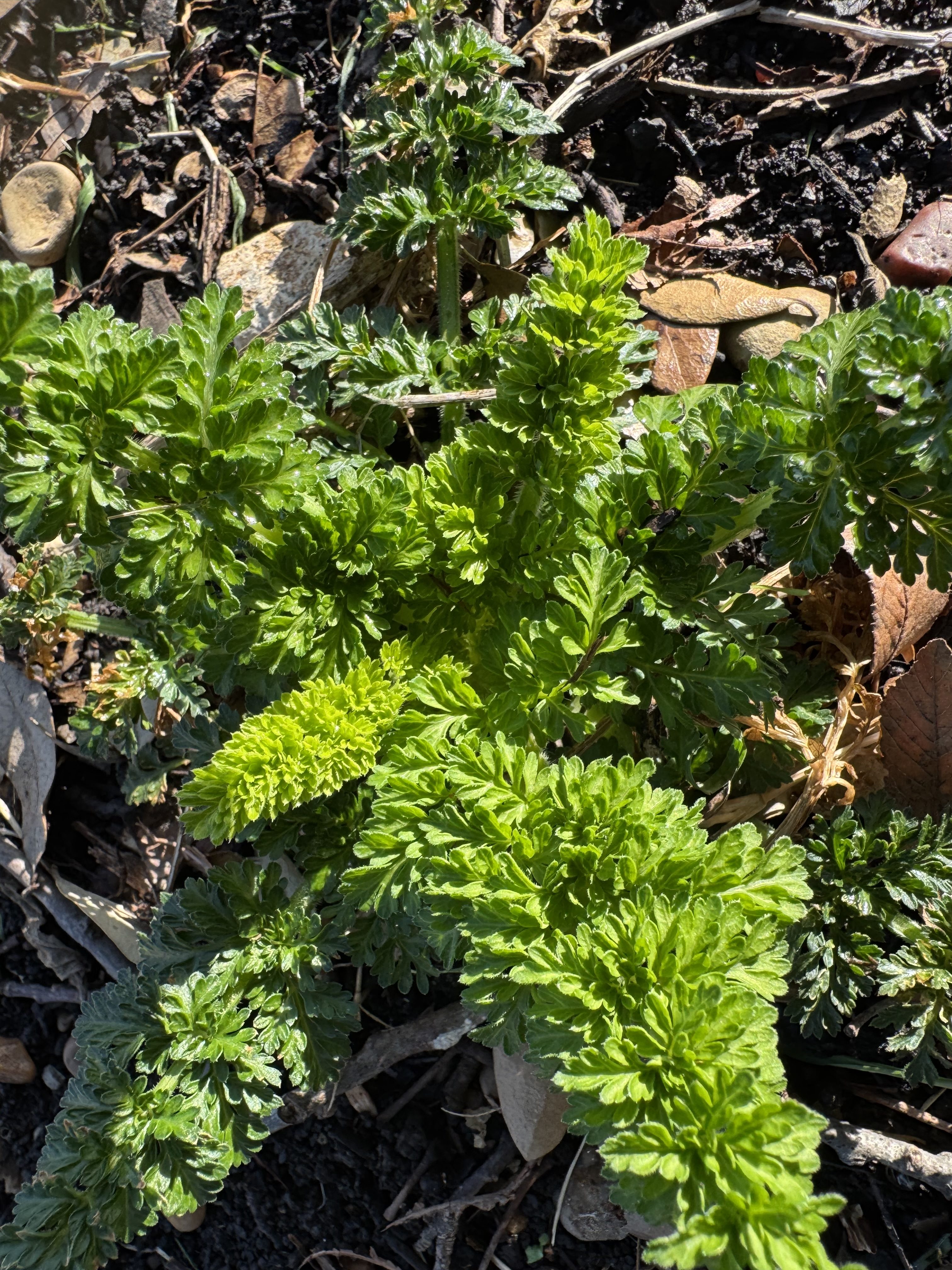
But take time to see the pale green of the new foliage as it emerges. Look and take pictures of the early flowers–its ok to notice how lovely weed flowers are–right before you pull them up!! Listen to bird song and the buzzing of the bees.
This is absolutely as important as the planting and pulling–PUT IT ON THE TO DO LIST —AT THE VERY TOP!!!
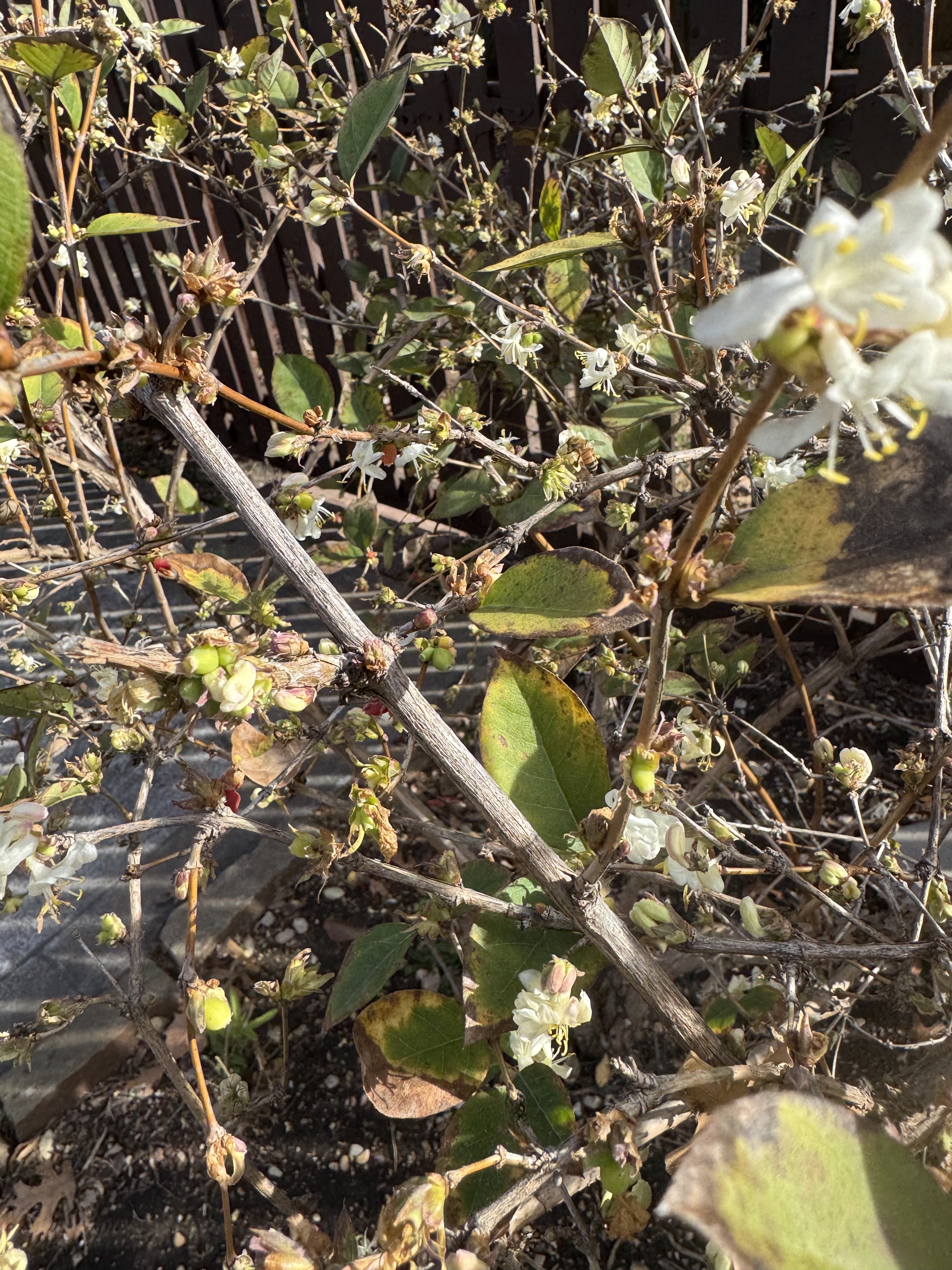
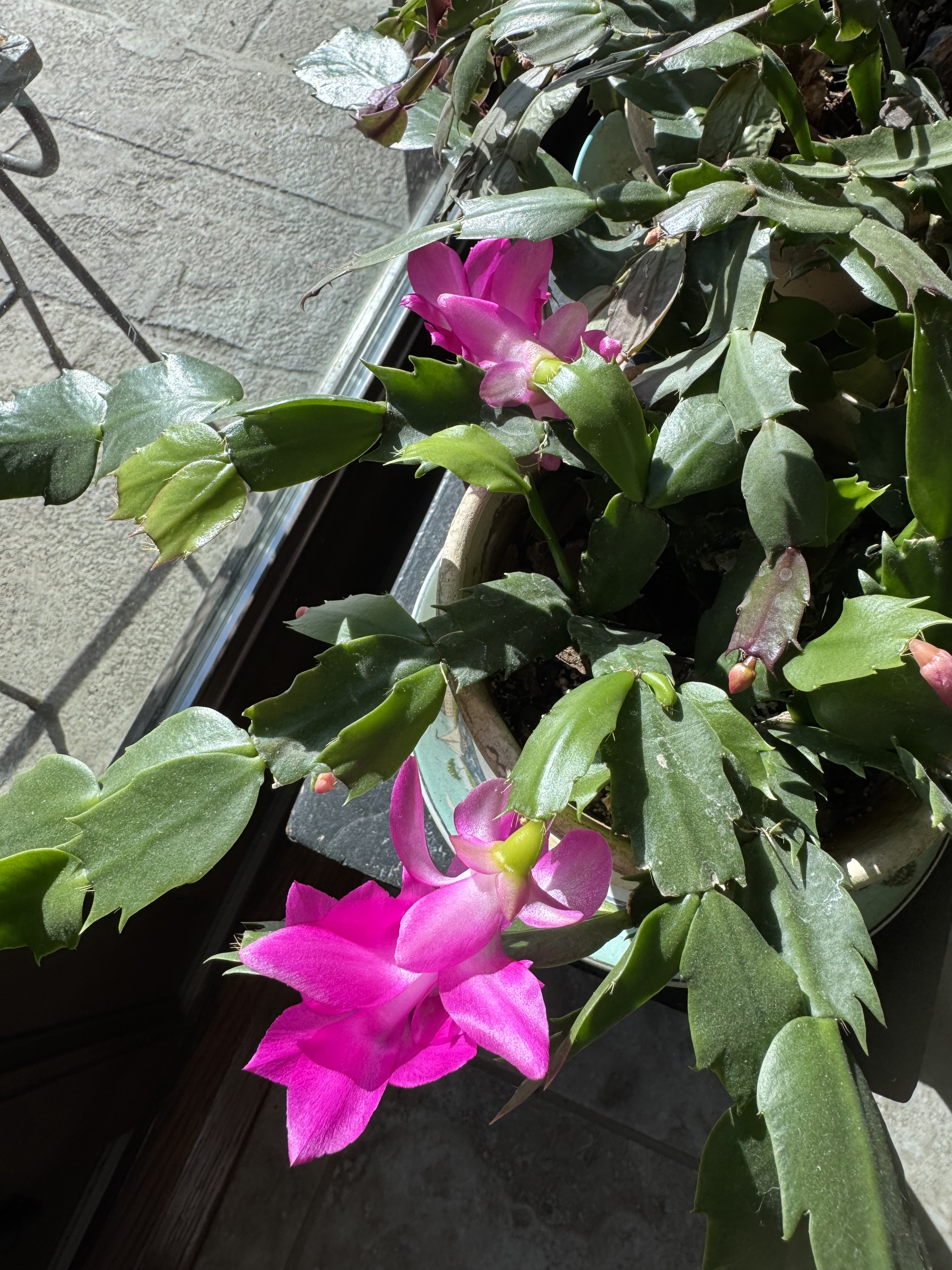
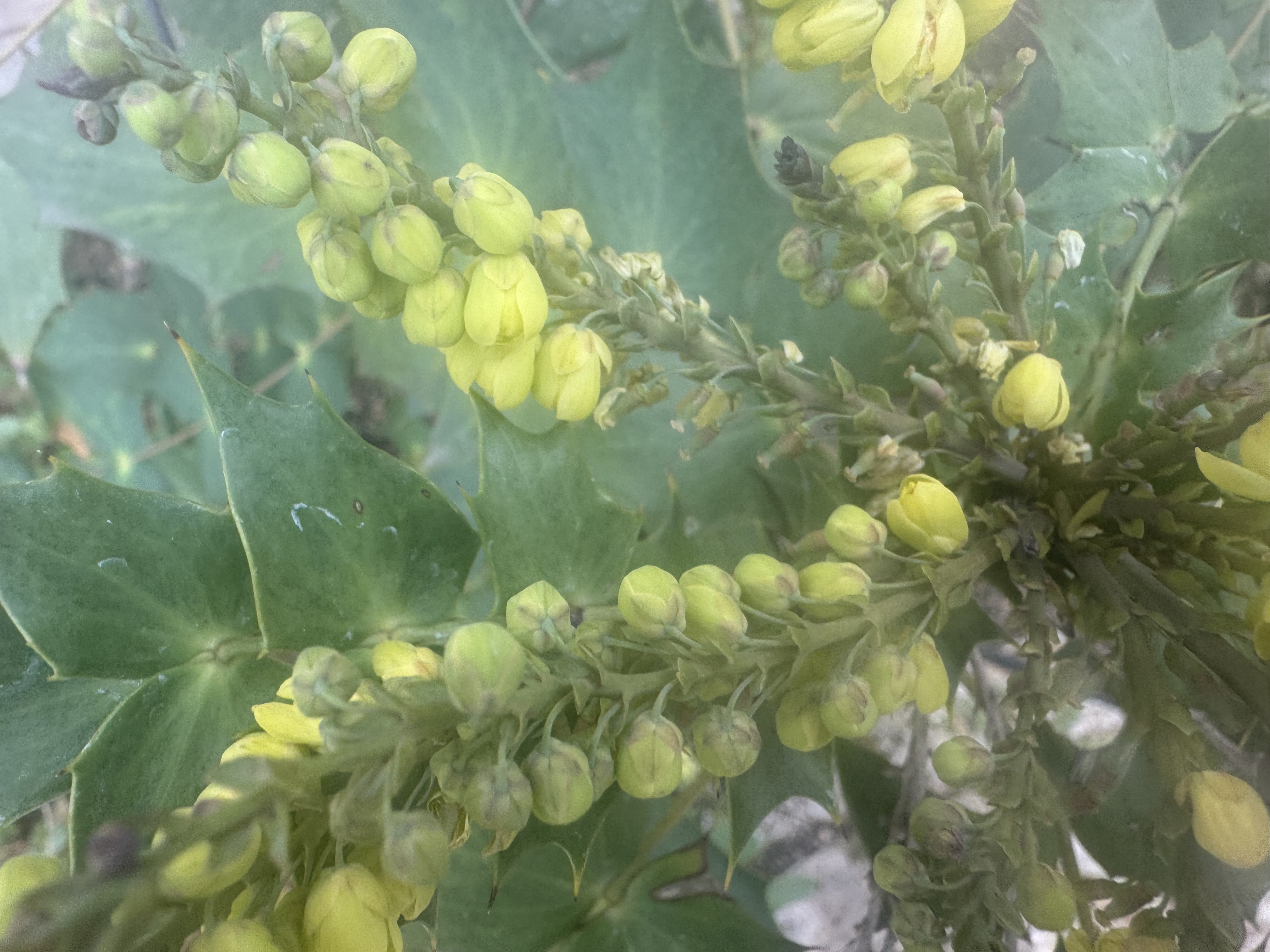
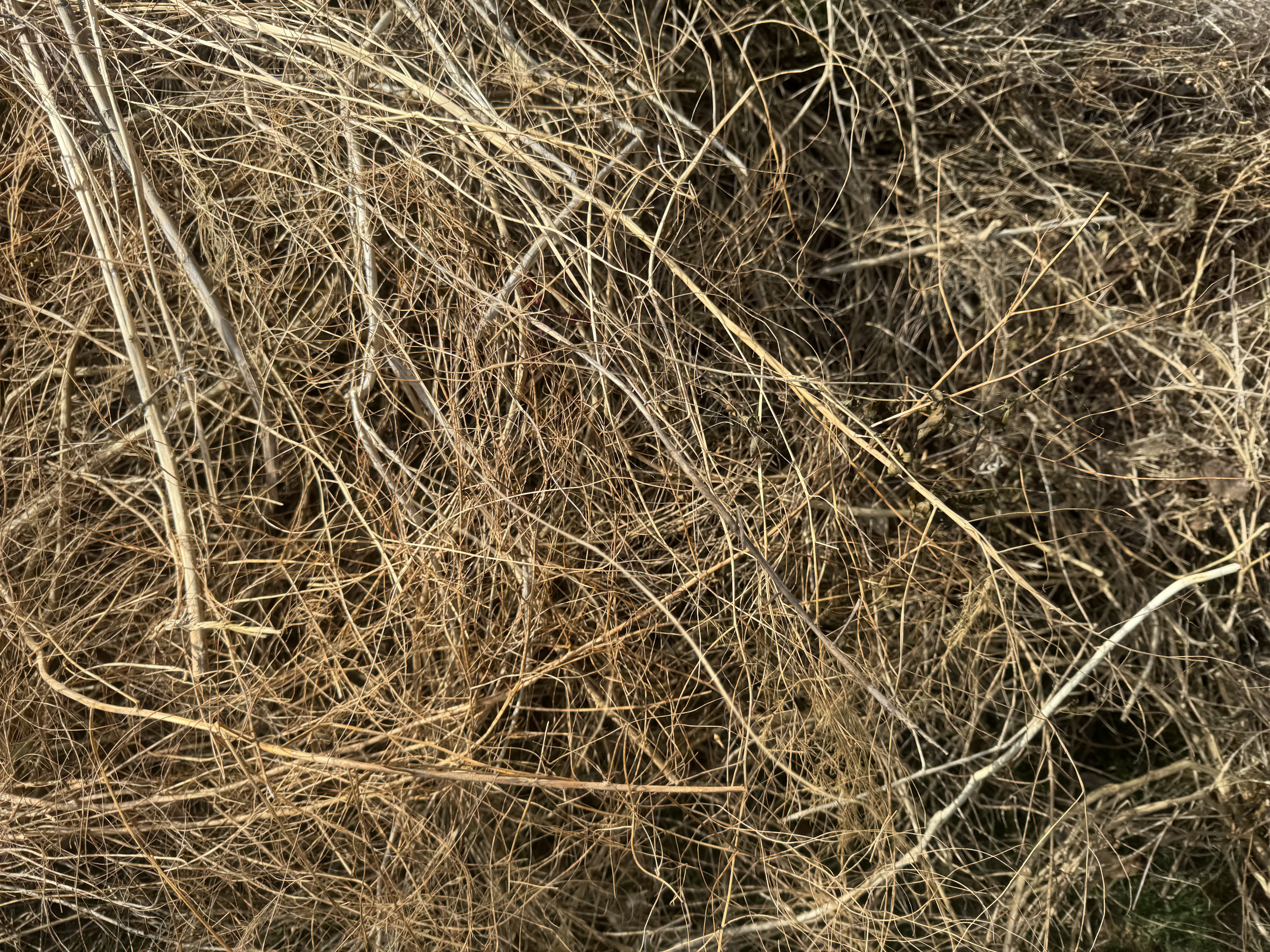
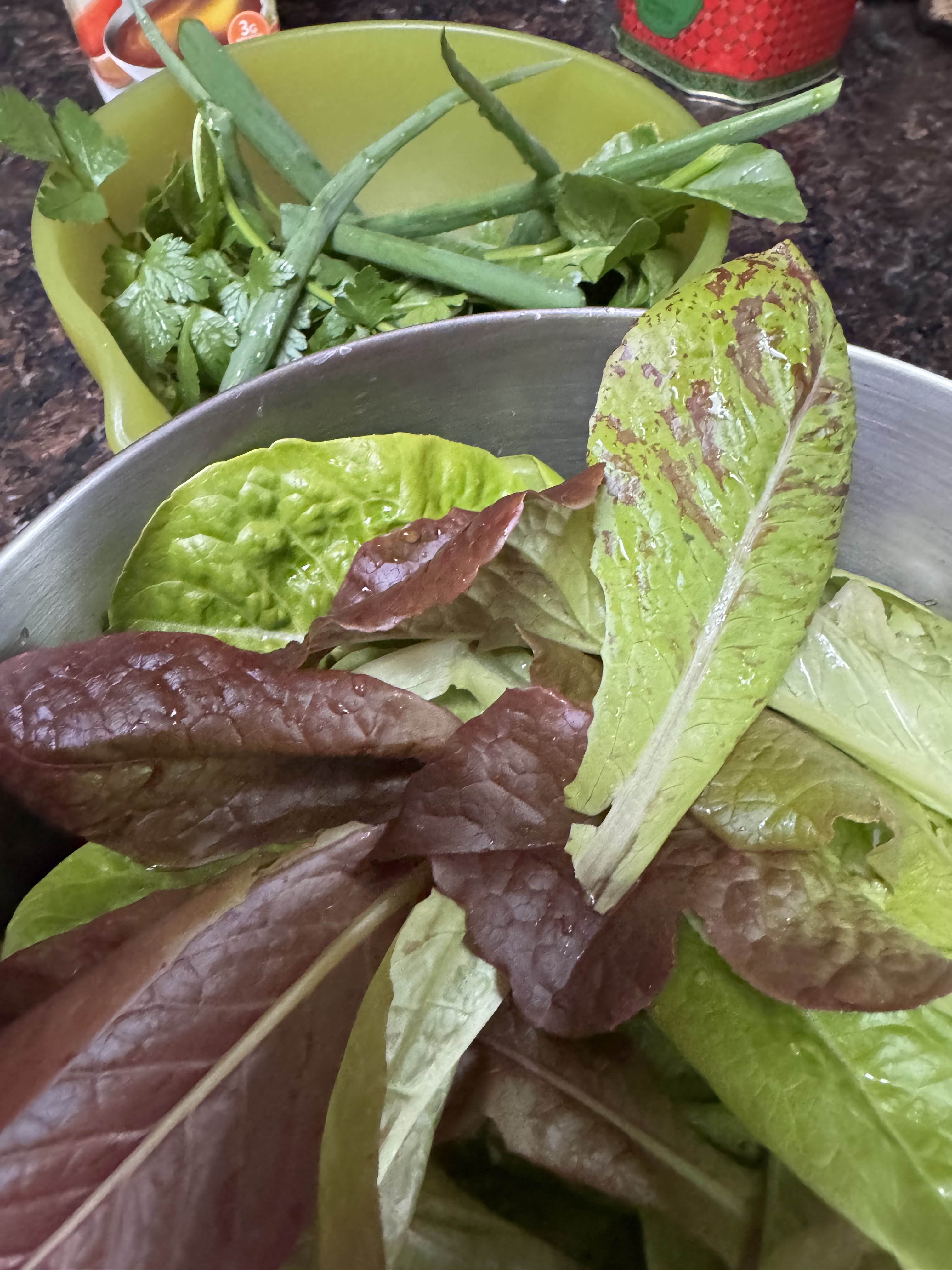
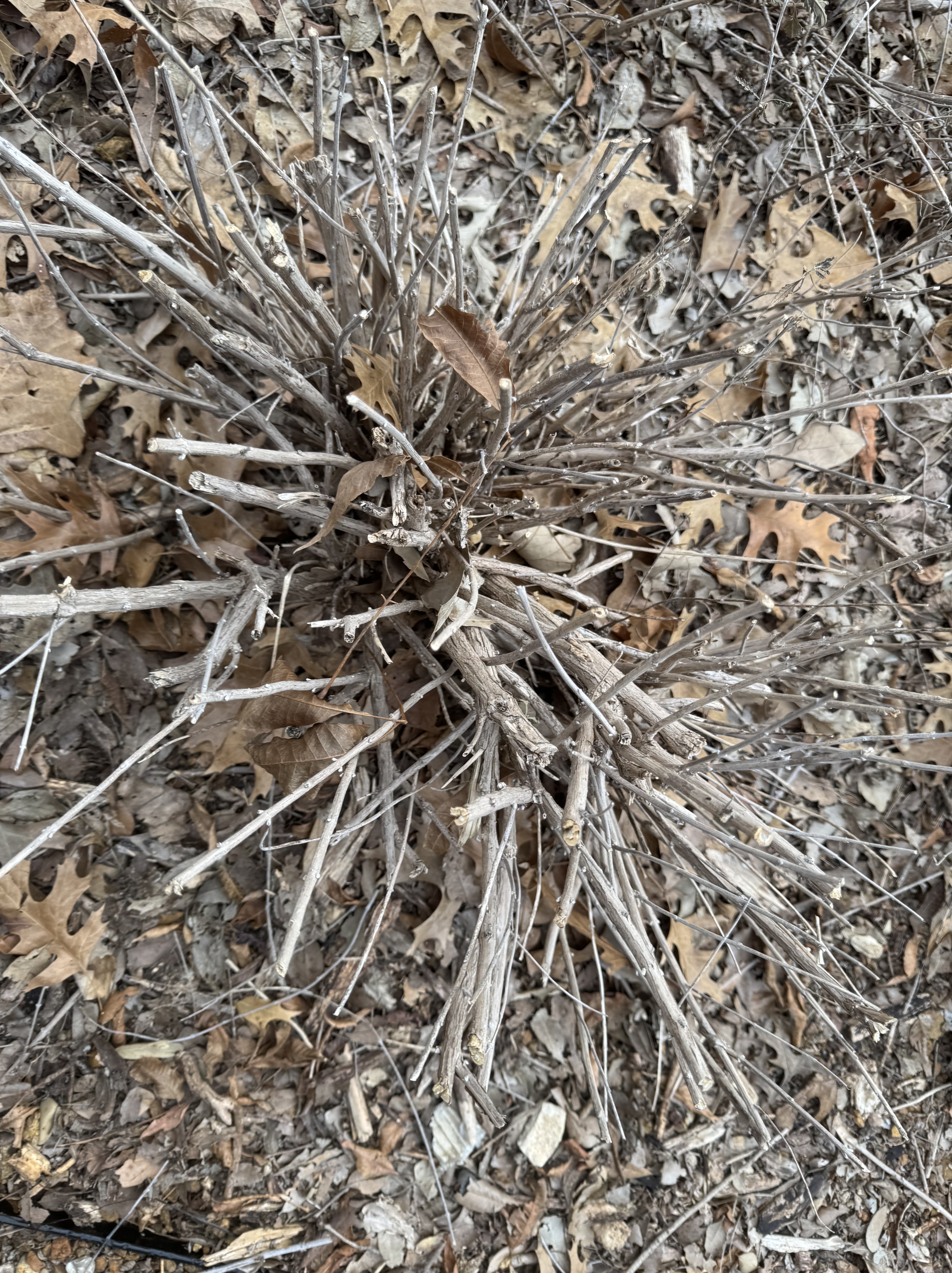
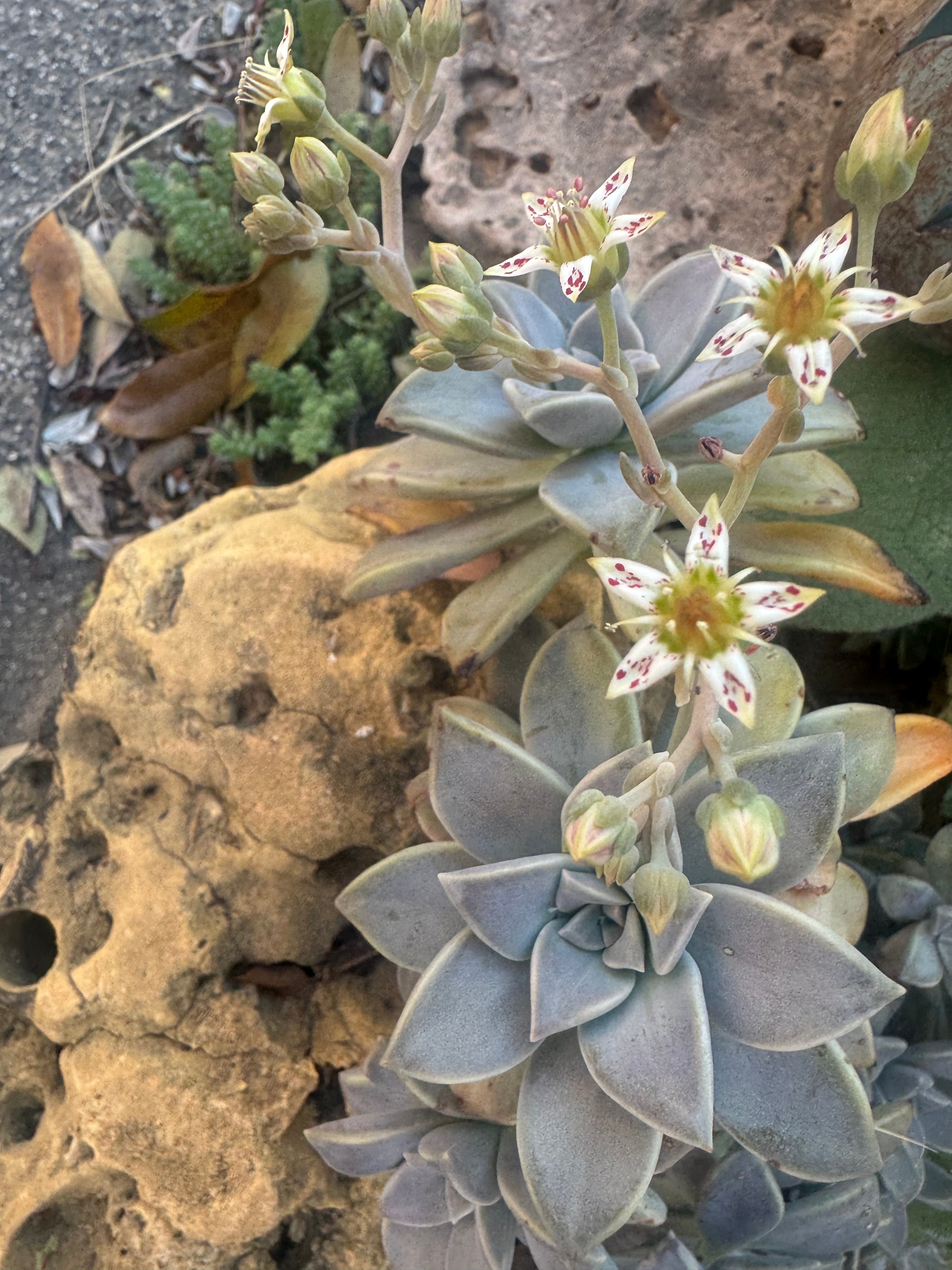
The new fresh growth is so beautifulWinter Honeysuckle, loved by the bees.Enjoy your house plants, remember Chrsitmas is not just one dayMahonia-so pretty nowHow much dead foliage can there be?Don’t forget to enjoy the vegetables from your gardenNow ready for a fresh start.You did it! All that damaged foliage was hiding the blooms.A tiny bloom on a succulent, but worth a close look
Susan Thornbury, Dallas County Master Gardener Class of 2008
Are you experiencing a touch of March Madness around your house? Having played basketball in high school and college, my husband follows it with such a high level of intensity that I sometimes have to “leave the room”. Considering the frustration from a gardening perspective, I’m beginning to see some similarities.
Let’s review the facts:
*The tournament features 68 NCAA Division 1 Men’s Basketball teams in an intense, single-elimination format culminating in a championship game that determines the national champion.
*It is a cultural phenomenon known for unpredictable upsets.
*It is one of the most anticipated events on the sports calendar, showcasing the amazing talents of collegiate athletes.
If you are wondering how that relates to gardening, smile first, then consider a gardener’s approach to spring planting:
*Beginning in early March, garden centers tempt us with an ocean of plants in every color, size, shape and texture imaginable. I’m sure the number far exceeds 68 participants.
*As seasoned gardeners, we understand the criteria for planting in Zone 8, and yet, we sometimes select material that either outperforms or overwhelming disappoints based on our very emotional decisions.
*Springtime for gardeners is our moment of anticipation. We’ve spent the cold, winter months studying seed packets, diligently reading instructions and carefully evaluating the possibilities. Why, because we hope to select the best performers in each “bracket”!
And so now, we have finally arrived at the most anticipated event on a gardener’s calendar; spring planting! Yes, some of our selections will have to be eliminated but, ultimately, the champions will reward us with their impressive performance. Wanna make a bet on that?
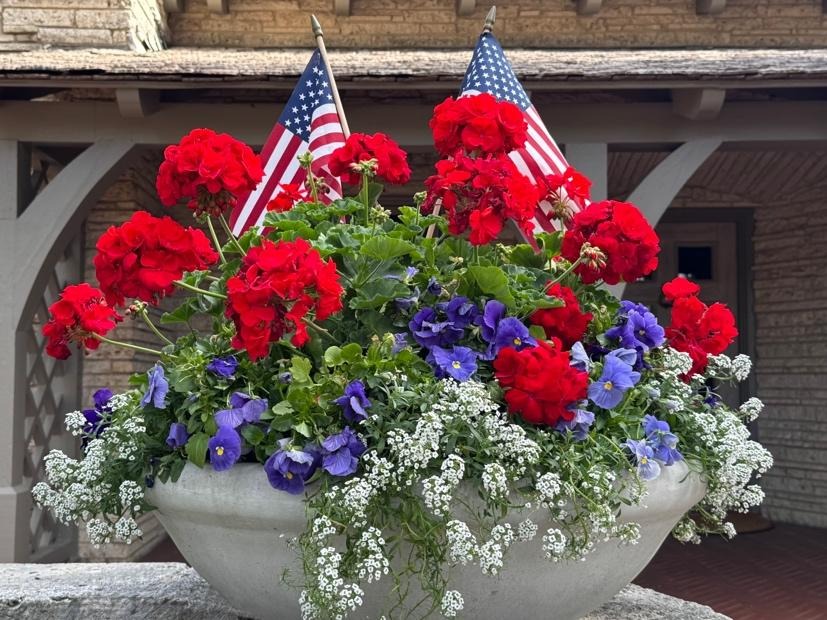
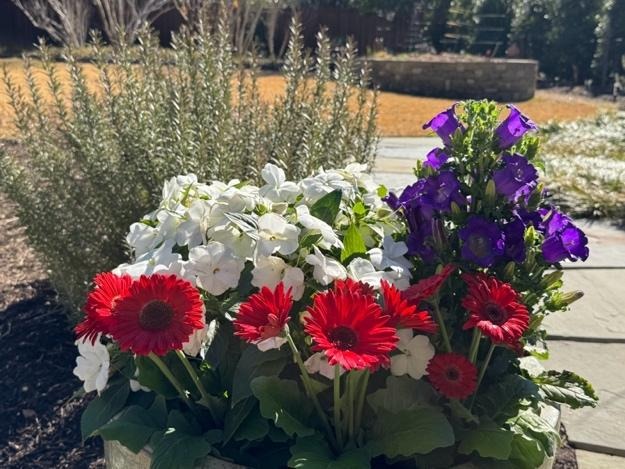
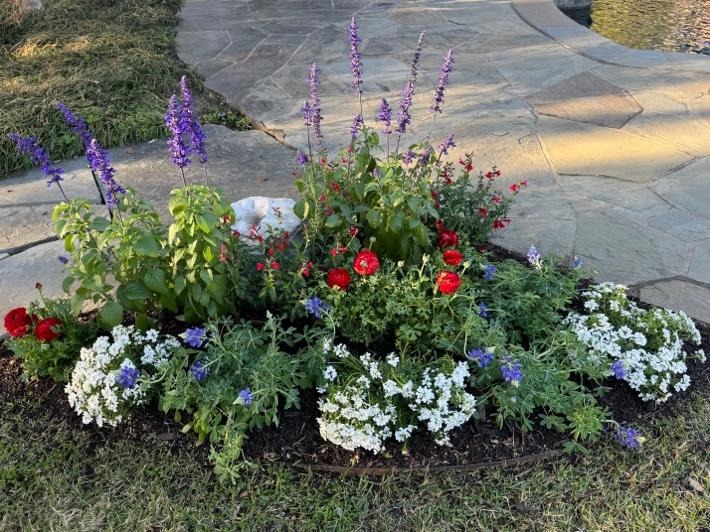
As we leave winter behind and begin the transition into spring, here are two red, white and blue flowerpot creations to welcome in some “March Gladness”!
Red: Ranunculus, Salvia ‘Radio Red’ White: Candytuft Blue: Mystic Blue Salvia and a salute to our state flower, Texas bluebonnets!
Throughout the next five months, look for fun ideas using some of the flowers listed below to create your own version of a patriotic garden display. (We would also like to include some of your own red, white and blue flower displays. Please send pictures no later than June 15th for the July 4th Grand Finale!)
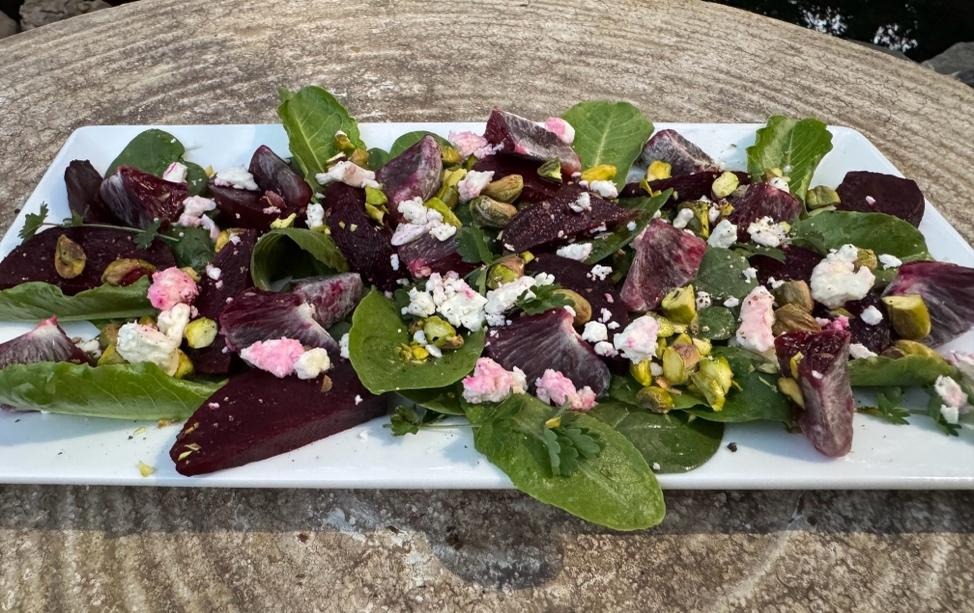
Our recipe for the month is a garden-inspired celebration of late winter to early spring selections. It’s easy to assemble and can be personalized according to your preferences. Substitutes might include grapefruit, navel oranges or mango as a fruit option. Walnuts, pecans or pumpkin seeds instead of pistachios. Goat cheese crumbles could replace the feta and, maybe, why not toss in some blueberries for a touch of blue!
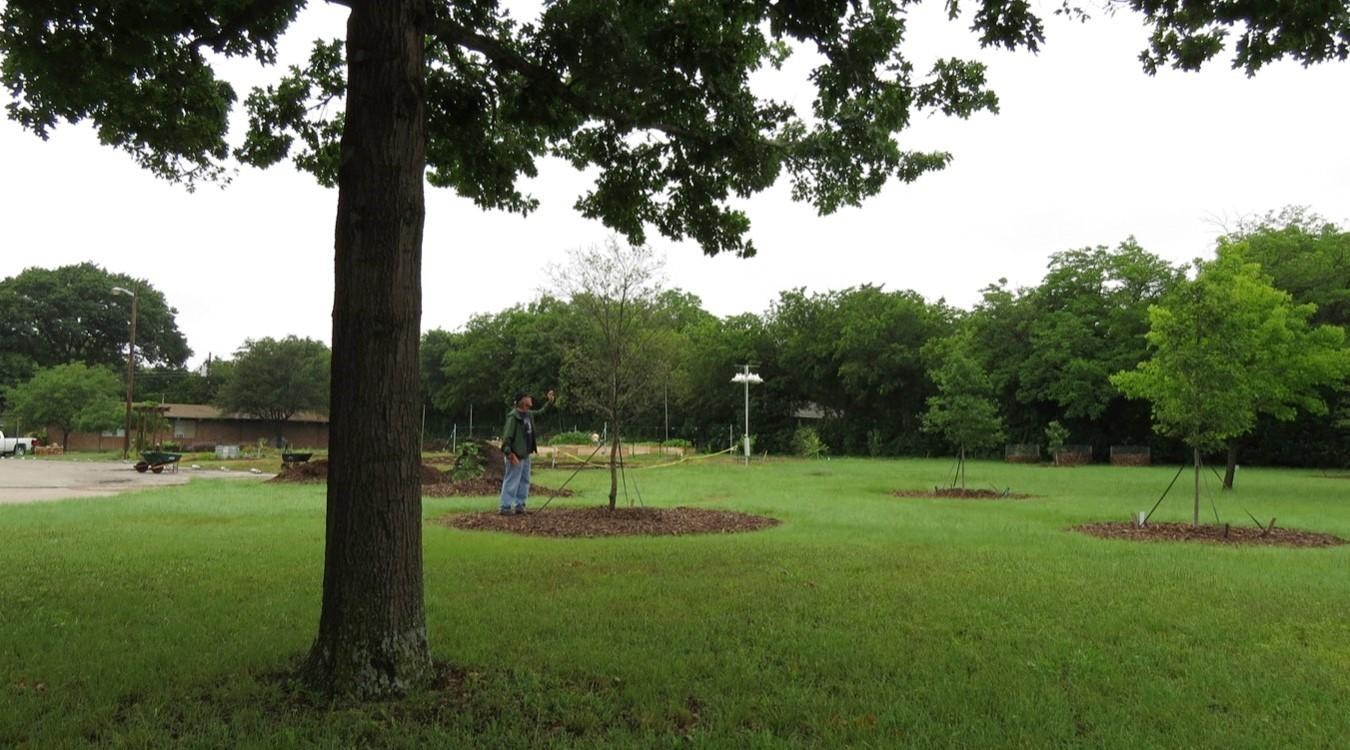
Join us for a practical, timely class on caring for your trees in the unique climate of Dallas. We’ll cover what you need to know for late-winter and early-spring tree maintenance, including how to prune safely (and what not to prune right now), how to identify and manage freeze damage, and best practices for fertilizing, mulching, and planting before the warm season arrives. With ongoing confusion around oak pruning restrictions and the growing issue of topping crape myrtles, this session will offer clear, research‑based guidance to help you keep your trees healthy and resilient all year long. Perfect for homeowners, gardeners, and anyone looking to improve their landscape stewardship skills.
Raincatcher’s Garden of Midway Hills 11001 Midway Rd, Dallas, TX 75229 Community Hall, South Church Building
11 AM, Tuesday, February 24, 2026
Note: To find the class, please park in the west parking lot and enter the south church building through the courtyard terrace.
The class will be taught by Anne LeSenne, M.S., Horticulture Extension Agent, Master Beekeeper, Master Arborist
Dallas County | Texas A&M AgriLife Extension
Administrative Offices: 6820 LBJ FWY Suite 3200, Dallas, TX 75240
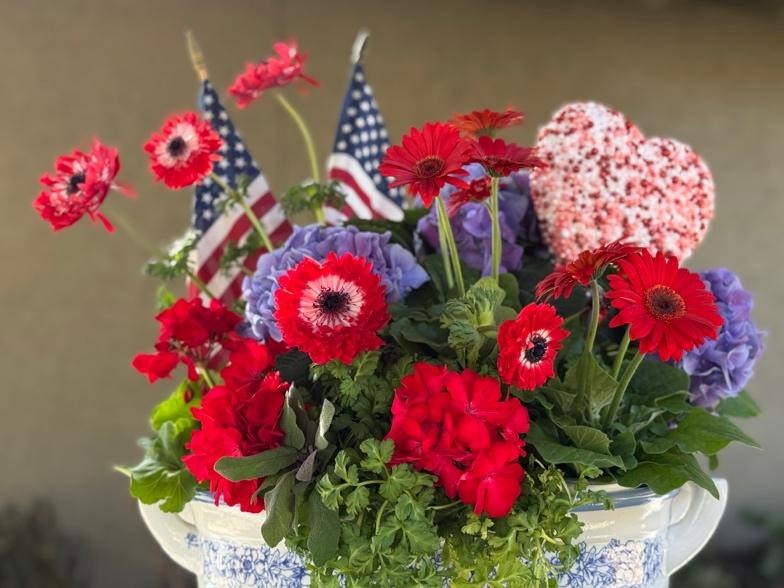
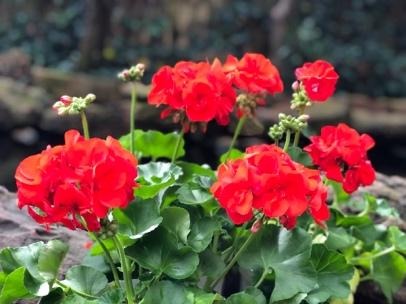
Are you ready to bid farewell to January and move into the next month of the year? If so, welcome to the first phase of our patriotic journey with a salute to the “month of love”. It seems very fitting to celebrate the occasion by recognizing Valentine’s Day, February 14th as the perfect time to focus on the vibrant, romantic color of red flowers. And what could be more appropriate than geraniums and Gerber daisies to get us started?
As we experience a seasonal “rebirth of nature”, consider the intensity of hues ranging from deep crimson, scarlet and ruby to cherry, maroon and burgundy found in red flowers. Our first arrangement allows blue hydrangeas to make a quiet appearance while the brilliance of red geraniums establishes boldness. Also irresistible are the Harmony Double Scarlet Anemone’s with white eyes encircling a black center. The regal look of Gerber daisies unifies the composition.
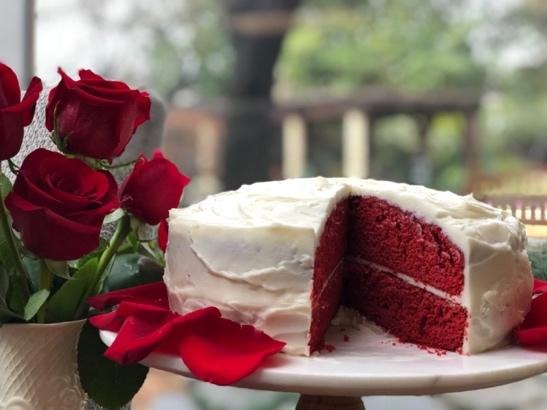
*February’s featured flavor is the Southern classic known as Red Velvet Cake. Embraced for its deep red color and velvety soft crumb, this moist and tender cake is embellished with a delicate touch of red rose petals. It’s time to indulge!
Linda Alexander, Dallas County Master Gardener Class of 2008
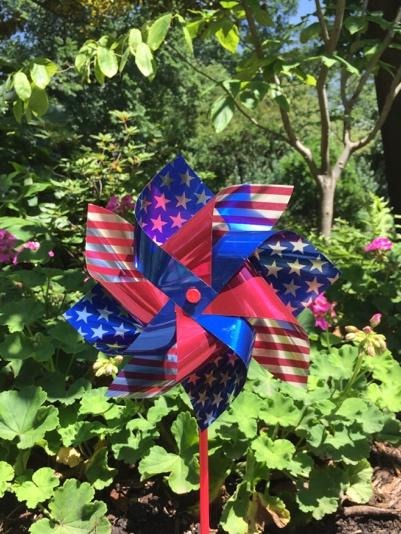
Join us for a month-by-month gardening journey starting February 4th then concluding with a big finale on July 4, 2026. We’ll visit gardens displaying a vibrant tapestry of red, white and blue flowers and more while pausing occasionally to savor some edible delicacies along the way. This promises to be a unique adventure which will inspire you to embrace the spirit of patriotism in your garden. Look for fresh new ways to let your creativity bloom!
From “patriotic pots” created by Dallas County Master Gardeners to dazzling “in-ground” vignettes that reflect the colors and symbols of our nation, we hope to fill you with a sense of pride for our great country. So, grab your favorite gardening gloves and let’s have some fun celebrating our nation’s 250th anniversary garden-style!
Linda Alexander, Dallas County Master Gardener Class of 2008
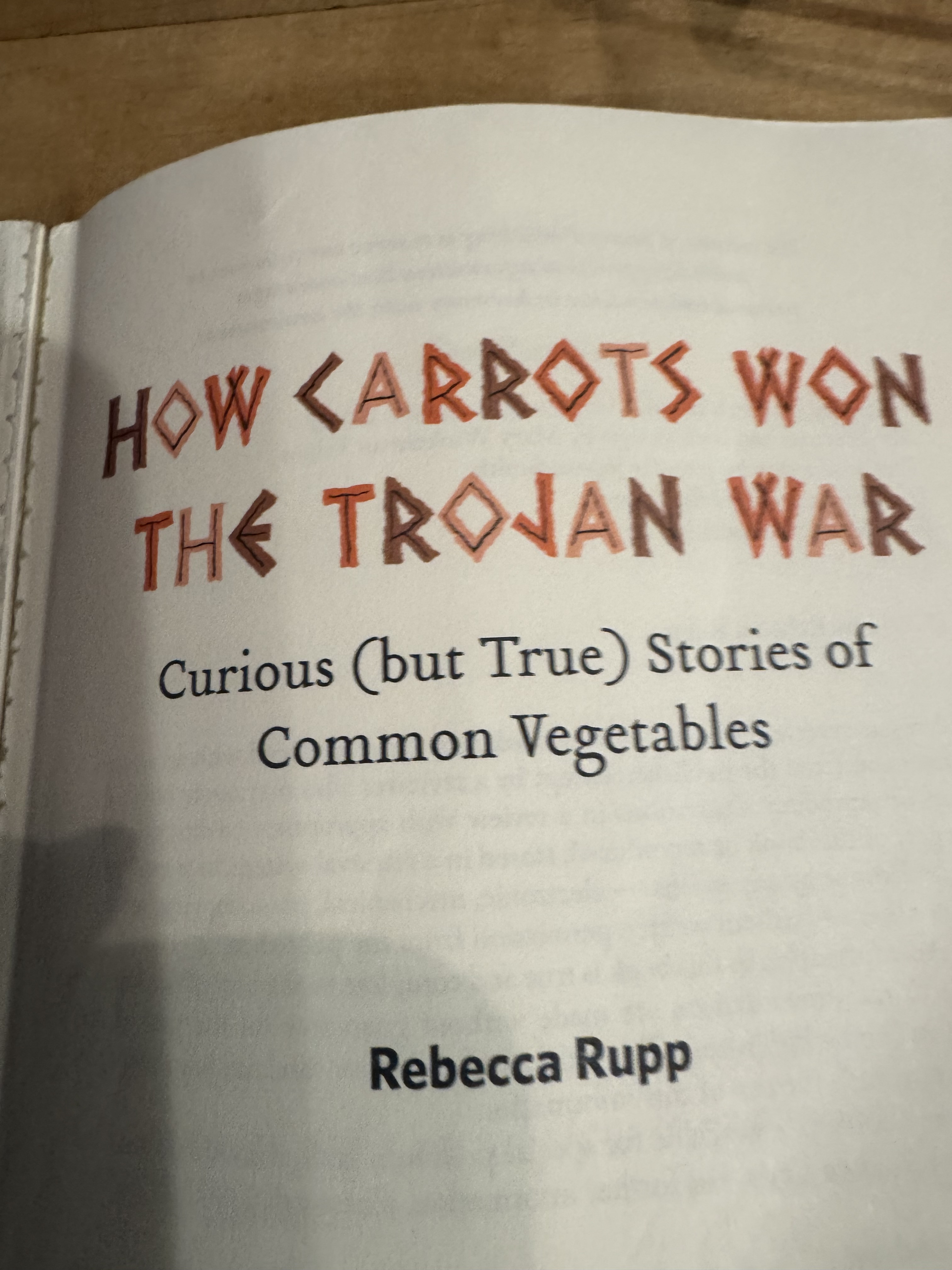
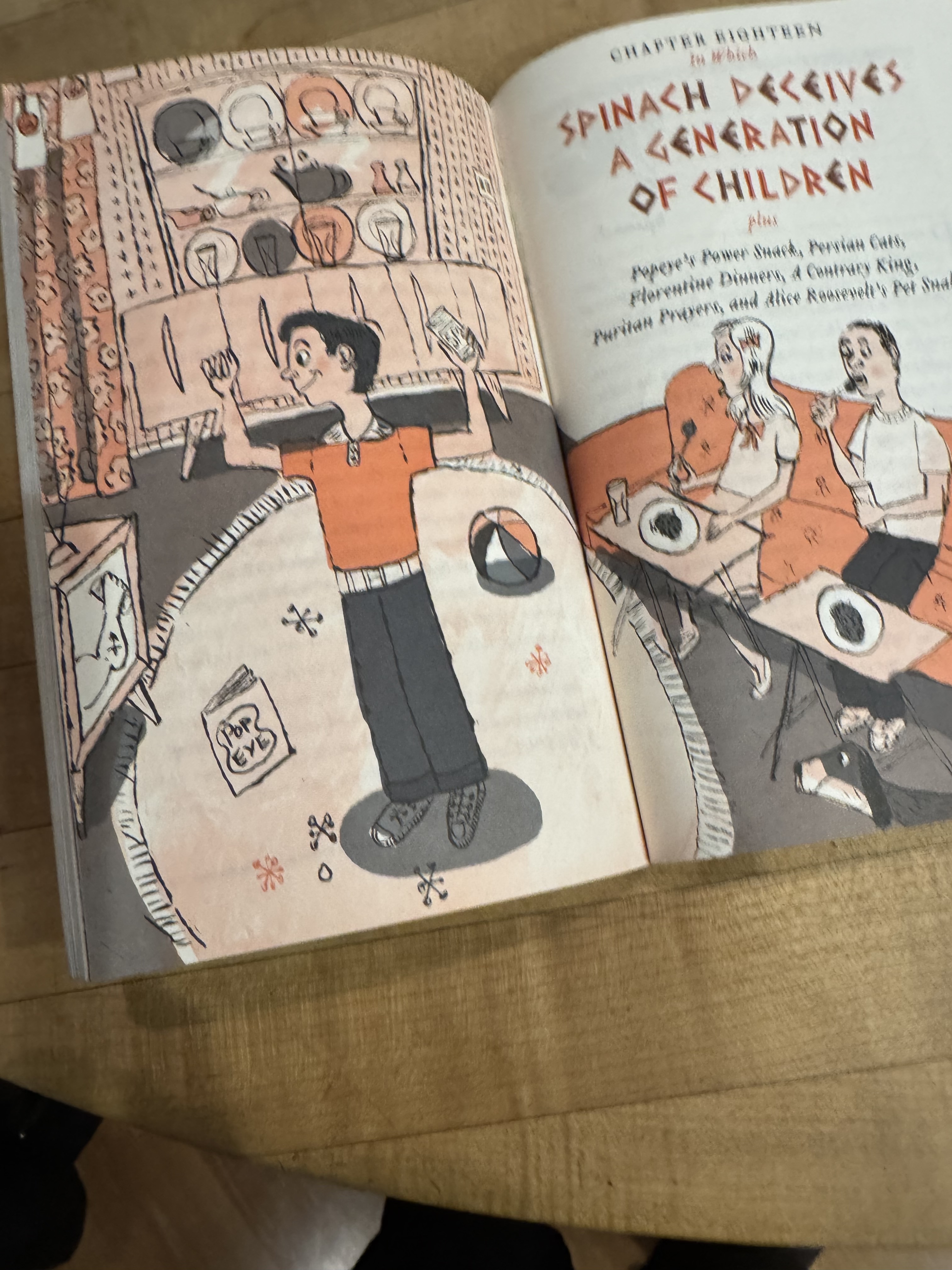
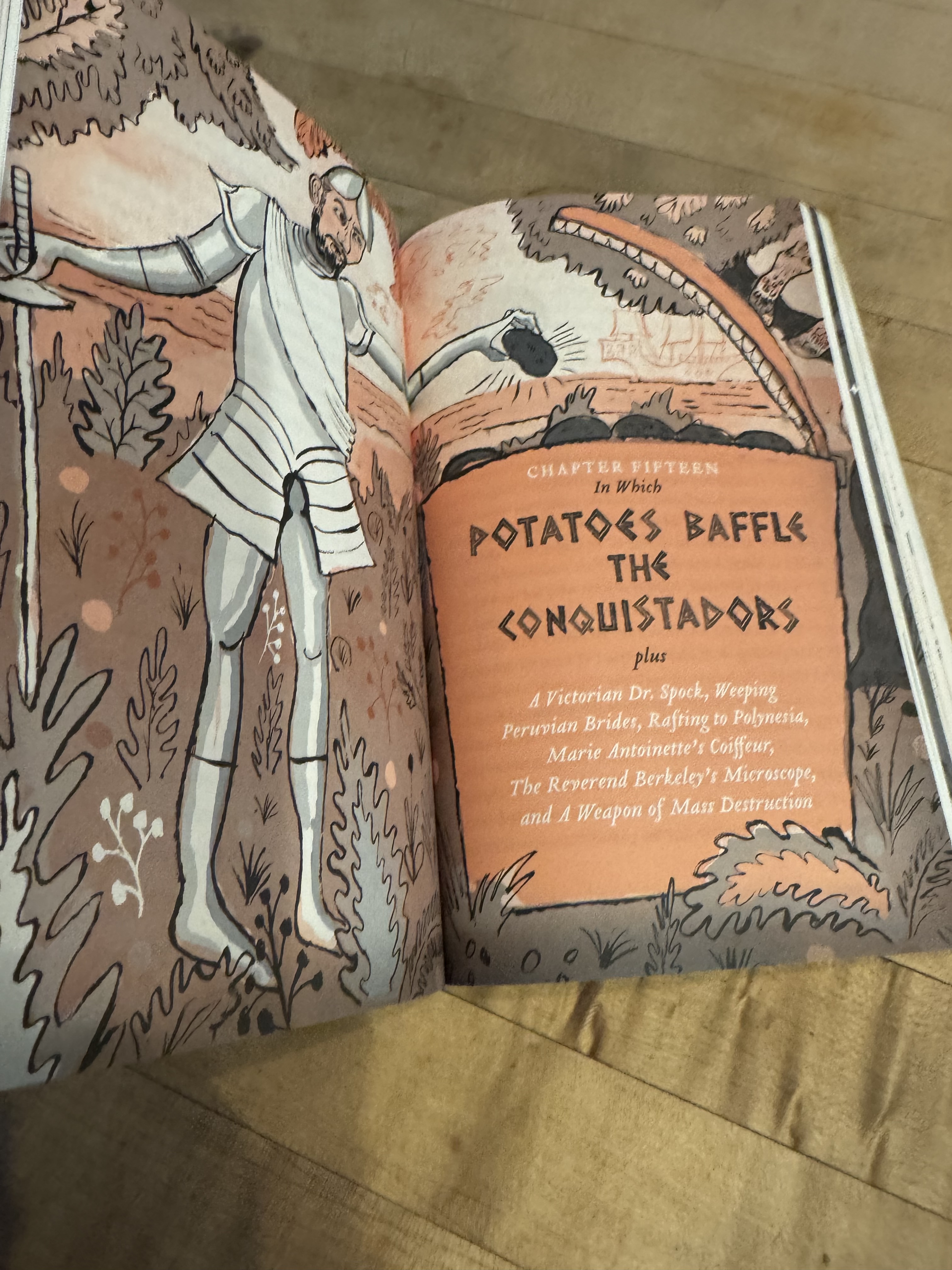
The sub title is Curious, but True-Stories of Common Vegetables
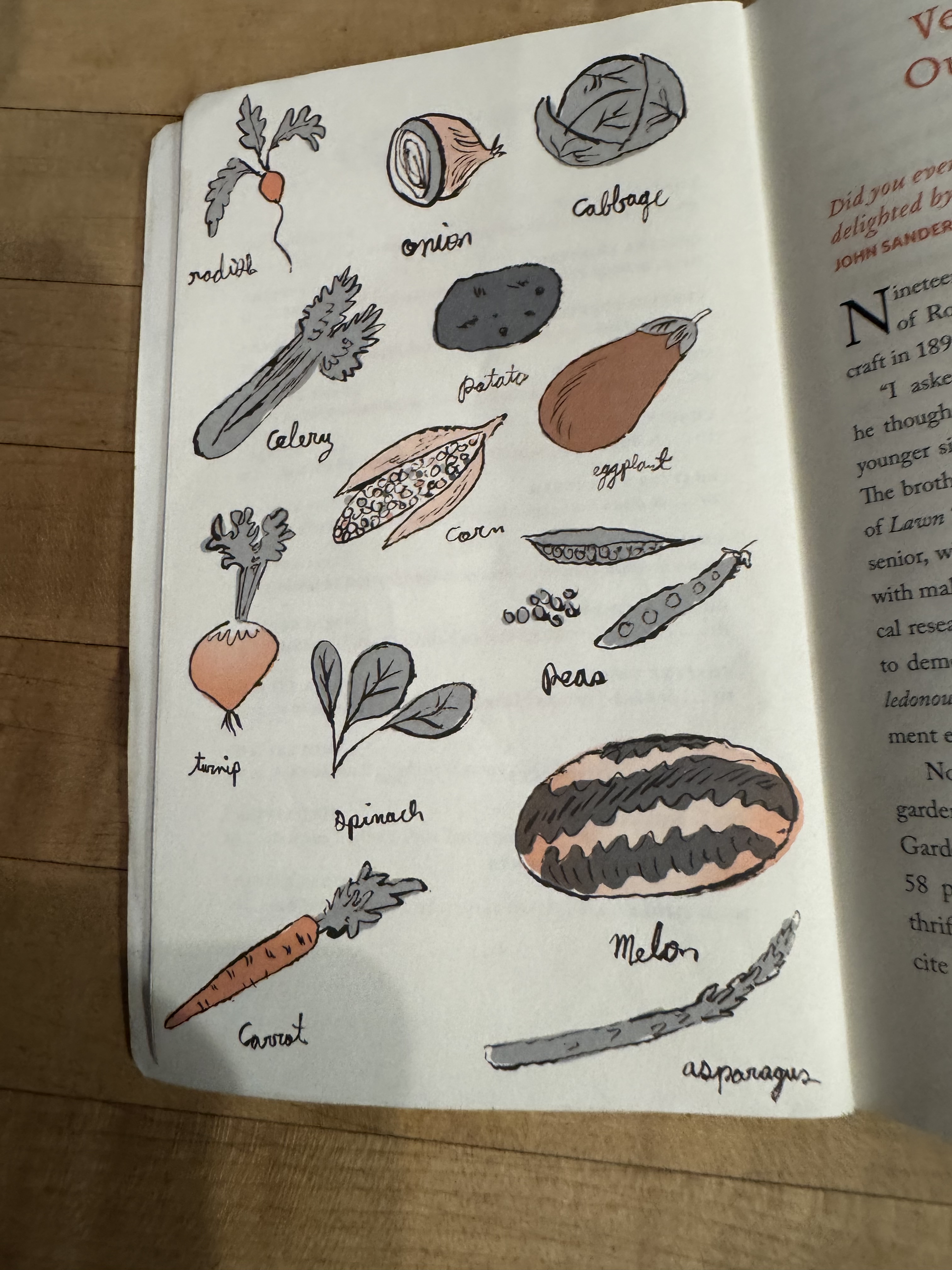
It’s not terribly long but its divided into 21 chapters each covering one vegetable that everyone will be familiar with. Honestly its hard to beat for a garden person’s reading list.
How often can you combine some basic botany facts–most of us could use a little review–right?–with amazing historical information on vegetables. This is serious research but presented in such an interesting way. Each chapter stands alone so you can read a little at a time –no need to feel you will forget the plot–since there isn’t one of course!
No way to cover the whole book really there is something new and interesting on every page. But a tiny sample to give you the idea.
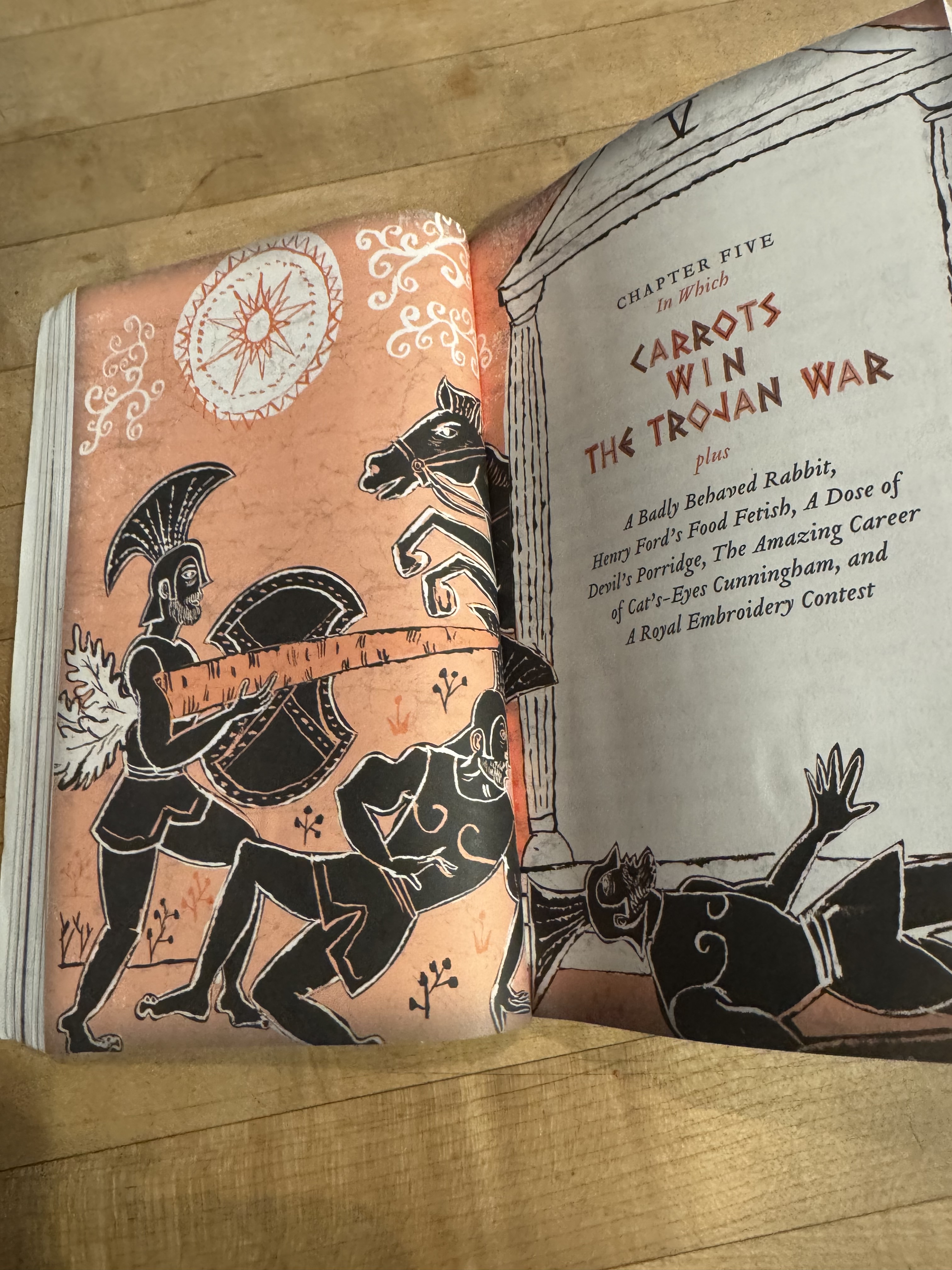
We can start with carrots–how many kids have been told to eat their carrots so they can see in the dark? Where did that come from? Well during the Battle of Britian radar was just installed in England a fact that the war department would rat, carrots are not able to give anyone amazing night vision but they are for sure good for you and no harm done! By the way raw carrots only release a tiny amount of beta carotene cooking allows them to release far more–in fact lots of vegetables are more nutritious cooked –should have known this I guess.
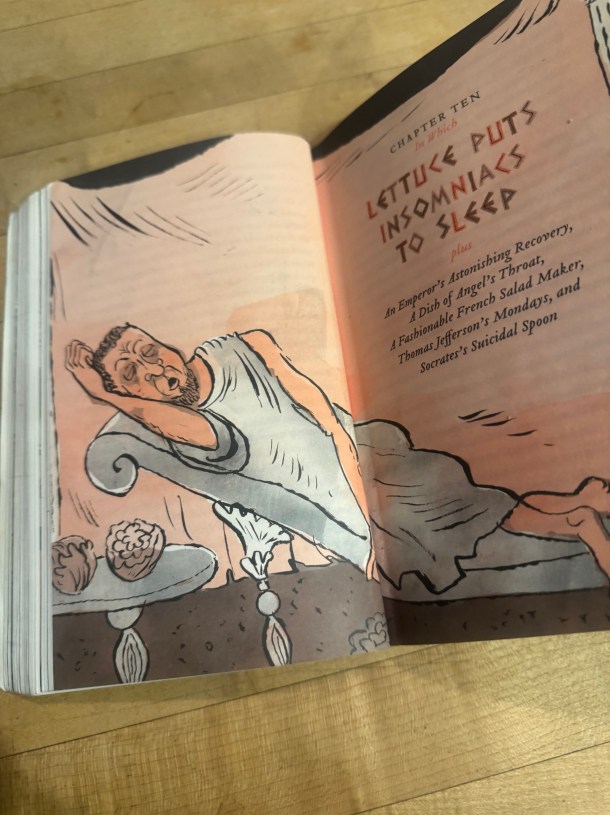
On to lettuce. Do you have trouble sleeping now and again? Lettuce to the rescue. Lettuce has been prescribed for sleep problems since ancient times. It turns out there is some truth to this. The white sap released from lettuce leaves was dried and used in sleeping potions in Medieval times. An extract made from wild lettuce leaves was used in hospitals through the second world war.
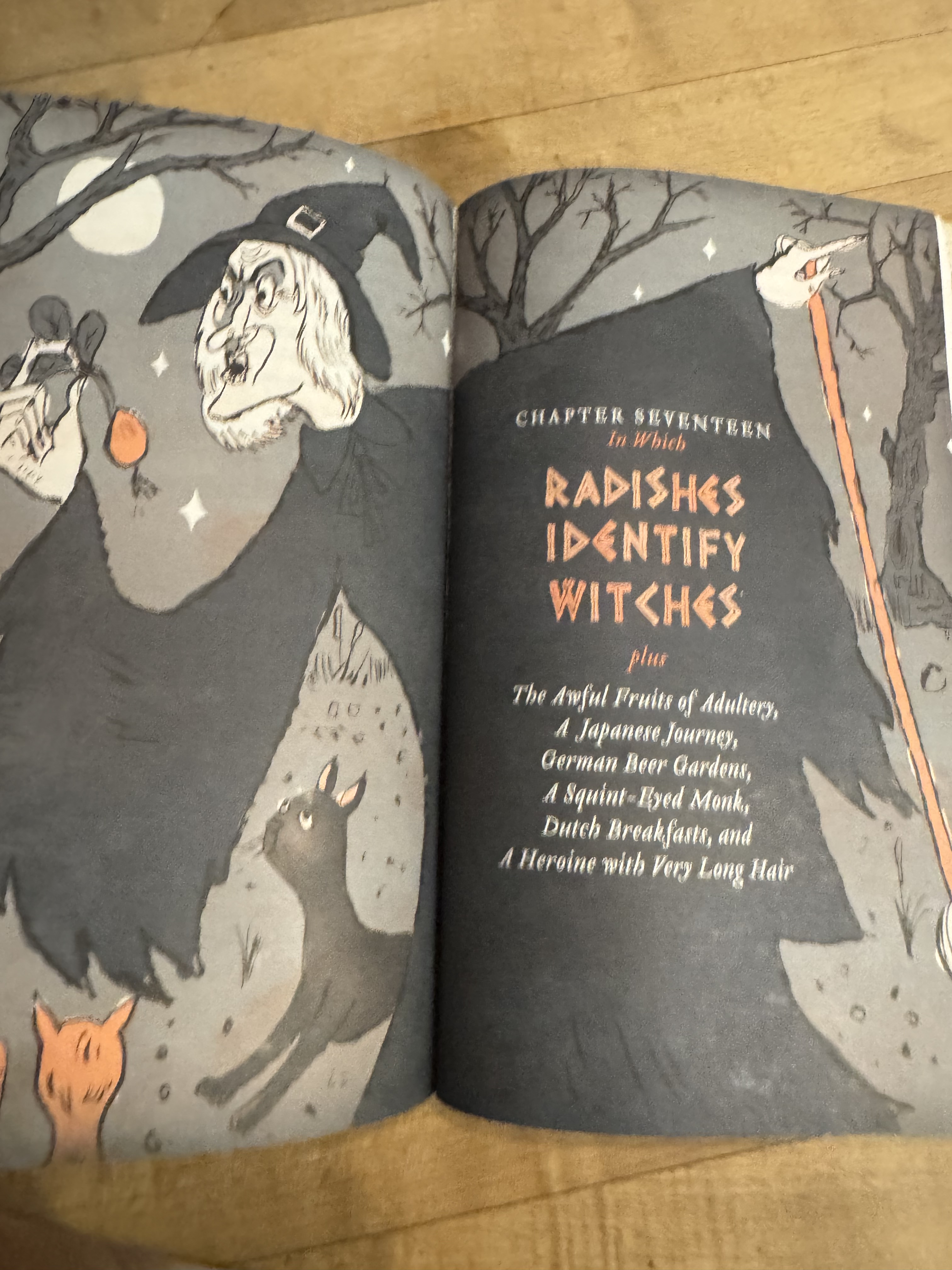
Now we must completely rethink radishes. No one takes them seriously enough it seems. There is lots to learn about the little radish. In the 9th century they were considered a powerful treatment for coughs. Before that Romans used them to punish those found guilty of adultery–how? Well that you must find out for yourselves!
Book reviews can’t go on too long–its hard to stop because there is so much covered in How Carrots Won the Trojan war. You will be amazed as you read each of the 21 chapters–vegetables are clearly amazing and how we come to have them is something rarely discussed–and it should be–we benefit from so much work and knowledge gained over in some cases thousands of years.
So–why read this book? You will learn alot–and it won’t be hard either. It’s an enjoyable–even fun experience.
But wait–there is more!
We want others to grow their own food–which means of course growing vegetables. So we are involved with formal and informal education.
A few fun facts can bring any interaction to life–throw in a few things you don’t hear everyday. Your audience will wake up enjoy and remember what you said. You need look no further –you will find all you need in this little book.
Susan Thornbury, Dallas County Master Gardener Class of 2008
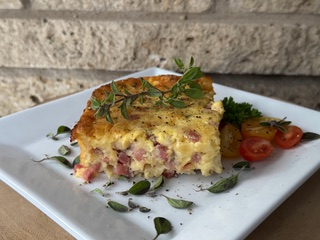
Recently, our local temperatures dropped into the mid-twenties overnight but a few of my herbs didn’t seem to notice. (FYI…This article was originally written on January 18th. As of Sunday, January 25th, our temperatures dropped down into the teens. It was a good time to make both recipes again). With a desire for something fresh from the winter garden, our evening meal would soon include a generous amount of chopped thyme and oregano to satisfy the craving. It was the perfect time to cozy up by the fireplace and indulge!
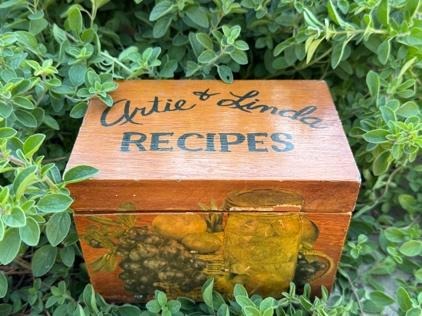
Just a few weeks before Christmas I stumbled across two vintage recipes from our very early years of marriage. In 1970, for a very practical wedding gift, my best friends mother had personalized a small, wooden box that would eventually contain treasured recipes from family and friends. Decoupaged with old magazine cut-outs and hand-painted “notations”, I experienced a heart-warming moment of pure bliss flipping through the tattered and worn recipe cards used throughout our 55+ years of marriage.
The original recipes didn’t call for freshly snipped herbs from the garden but that was going to change. After years of traveling down a long culinary path of failures and successes, I felt confident about adding a complimentary herbal component to each one. In her 2009 book “What Can I Do with My Herbs?”, author Judy Barrett offers the following:
“Because of the diversity and mysterious nature of herbs, many people are a little bit afraid of them. And, for some bizarre reason, we are more afraid of fresh herbs than we are of those little jars of dried stuff at the grocery store. But we need not be afraid. Herbs are our friends!”
Her book has helped me considerably over the years to power through my fears and be more intentional about growing herbs that can be used throughout the seasons. And so, here are two of those timeless, old recipes updated and transformed by the simple addition of freshly gathered herbs from my winter garden. ENJOY!
FYI…the standard recommended ratio for substituting fresh herbs for dried is:
Standard Herbs (Basil, Marjoram, Oregano and Thyme)
Have you noticed an absence of honeybees in your winter garden? If so, maybe it’s time to add a few flowers that will survive our seasonally cooler temperatures. When other food sources seem to dwindle, consider providing some late-season fuel for bees to build a winter supply of honey for the hive. FYI…Honeybees need about 50 -100 pounds of honey to last the entire winter!
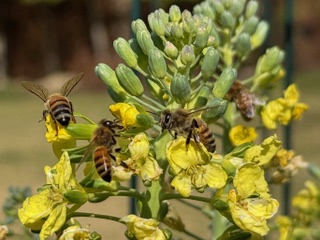
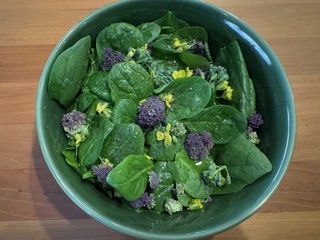
Look closely and will you see four honeybees just on this one bunch of broccoli blossoms. It was amazing to observe literally dozens of honeybees at a time working nonstop to gather nectar for the hive. The benefits of letting one of the broccoli plants in my raised bed flower was to provide a food source for the bees. Also, the open flowers and leaves are still edible and can be used in salads or for sauteing. (Spinach salad topped with purple broccoli florets and blossoms.)
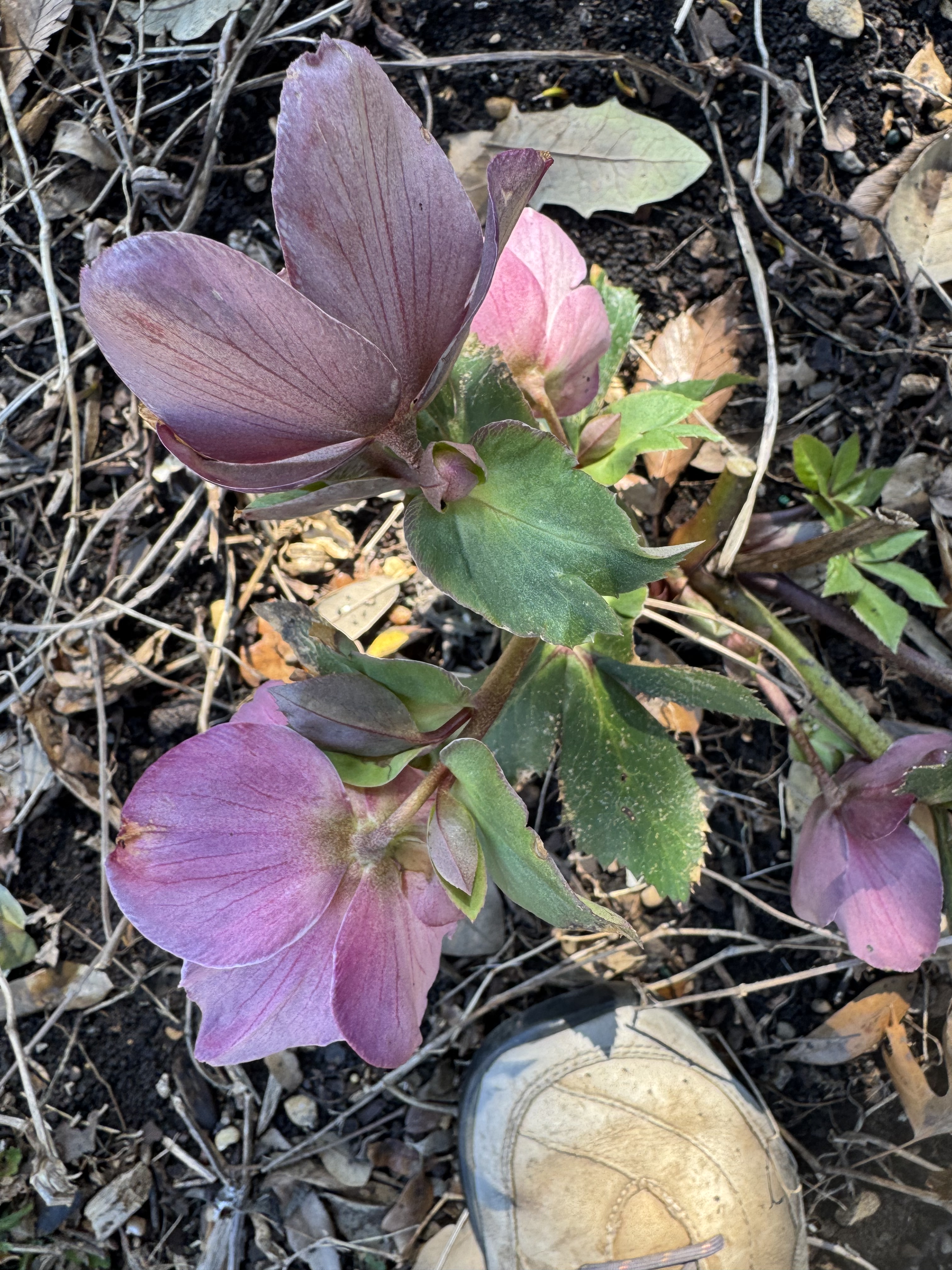
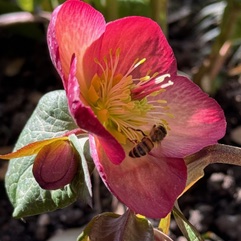
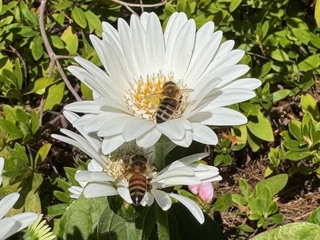
Hellebores provide sweet nectar for energy and protein-rich pollen to honeybees during the winter months. Honeybees visit daisies because they offer lots of pollen. This helps to feed developing larvae.
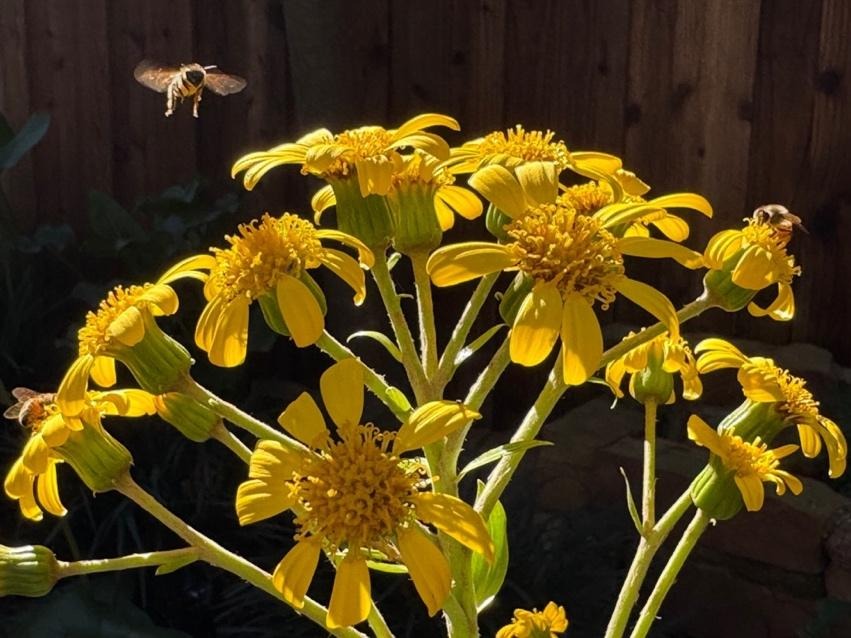
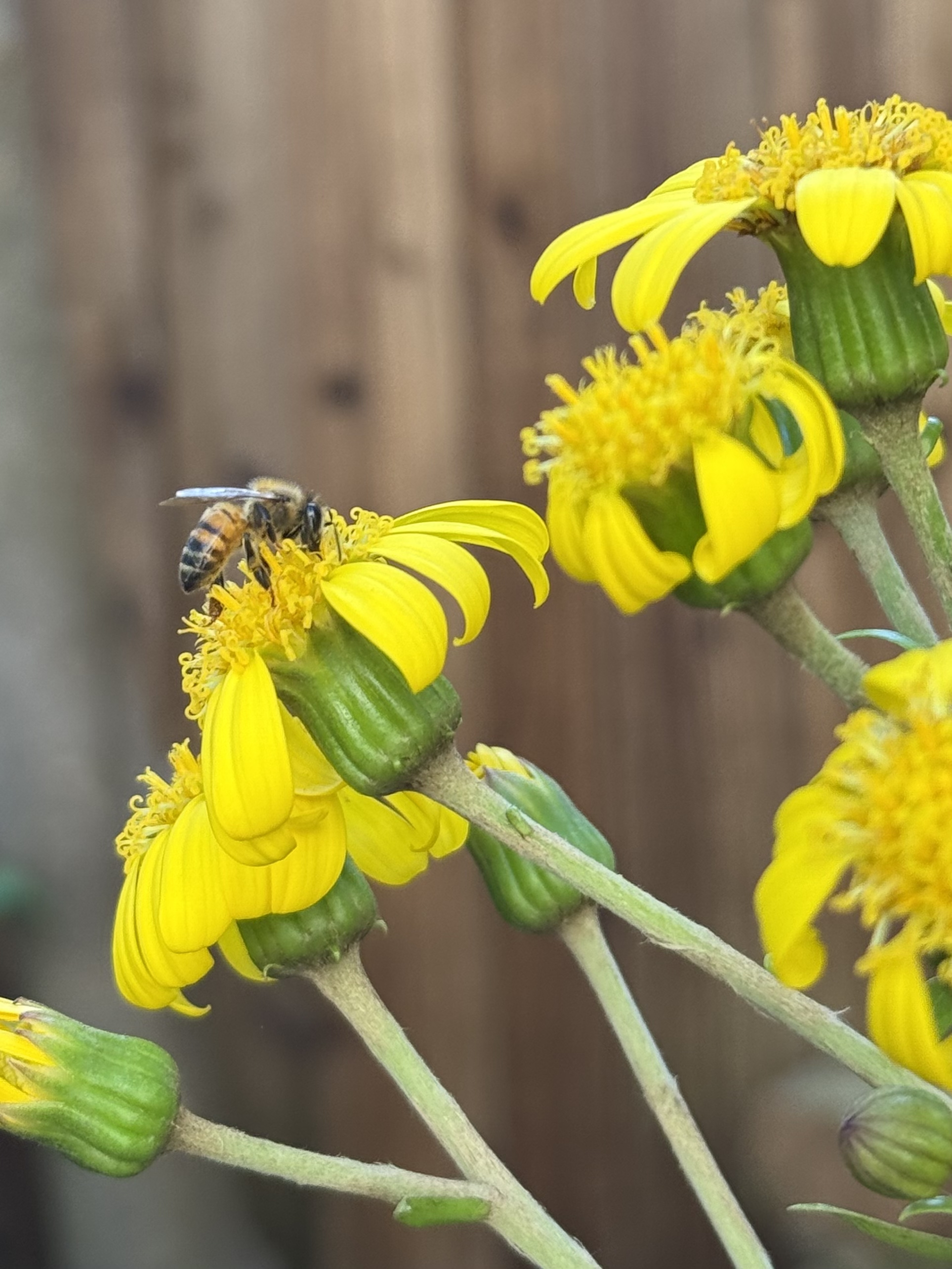
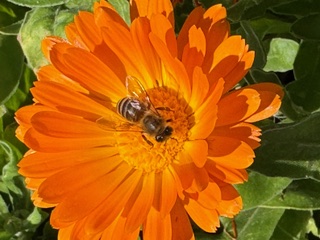
Starting in late fall and early winter, honeybees spend hours foraging for both nectar and pollen from the Farfugiums around our Koi pond. Every morning and continuing until late afternoon honeybees can be found buzzing among the Farfugiums bright yellow flowers when other blooms are scarce. Calendula flowers contain a significant amount of pollen and nectar per flower, making it a great plant for attracting pollinators.
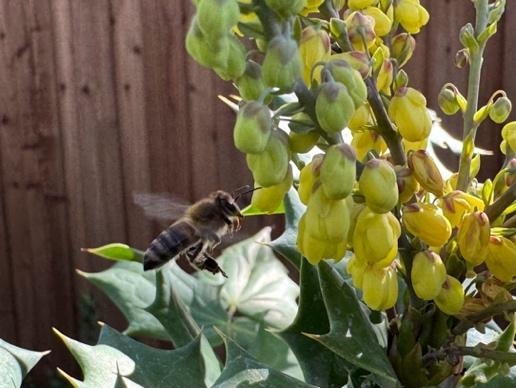
As blossoms started appearing on our Leatherleaf Mahonia in early January, honeybees began actively foraging for both nectar and pollen on the fragrant clusters of yellow flowers.
We would love to hear from our readers about other ideas and ways you are helping the honeybees during wintertime. Let’s do our part to provide blooms that ensure bees can gather enough food to sustain themselves while increasing their chances of surviving winter and thriving into spring. Here are some important reasons why winter blooms are essential:
*Food Scarcity: Winter and early spring are lean times for honeybees; most flowers are dormant, leaving bees without food.
*Energy and Protein: Nectar provides carbohydrates for energy, while pollen offers essential protein; both are needed for colony health and growth, even in winter.
*Colony Survival: Adequate food stores are critical for bees to survive the cold months, making fall and winter foraging vital for building reserves.
Enjoy this short video illustrating how tirelessly honeybees work to maintain a healthy hive!
Linda Alexander, Dallas County Master Gardener Class of 2008




 DALLAS GARDEN BUZZ